Can a heat pump keep up in a South Carolina winter

Once you send the form, finding a pro is off your list.

Hand it off

Will my heat pump keep up when it gets cold here in South Carolina?

Most winter mornings here don't ask much of a heat pump, but every so often the temperature drops into the 20s, and that's when you notice it running longer, or the air coming out feeling cooler than you'd like. If you're wondering whether that's normal or a sign something's wrong, it depends on what's happening outside and what the system is doing to compensate.

Yes, down to about freezing. Below that it needs backup heat to keep up.

A heat pump pulls heat from the outside air, and the colder that air gets, the less heat there is to pull. Through most of a South Carolina winter, that's not a problem. The system is sized for the cold snaps too, and when the outdoor temperature drops into the 30s or lower, it switches on electric resistance heat to make up the difference. That's by design, not a malfunction. You'll feel it as the air from the vents running a little cooler than usual, or the system running longer to hold the same indoor temperature. If it can't get your home warm at all, or it's running constantly without catching up, that points to a problem with the system itself rather than the weather.

A smiling man in a dark navy sweater sits on a light sofa in a living room, with a glass bowl of popcorn on a wooden coffee table and bookshelves behind him.
A smiling man in a dark green sweater sits on a tan leather sofa in a dimly lit living room, with a bowl of popcorn in the foreground and a kitchen area blurred behind him.
A smiling middle-aged man in a dark shirt sits on a gray sofa in a living room, with a bowl of popcorn on a side table and shelves, a window and kitchen area behind him.
A smiling bearded man in a dark gray t-shirt sits on a gray couch in a living room, with a large glass bowl of popcorn on a wooden table in the foreground.
A closed laptop and a cream mug of coffee on a coaster sit on a dark wooden table, with a potted plant at left and a kitchen counter, tiled backsplash and shelf of ceramics in the background.

What a cold snap here actually does to your heat pump

When the temperature drops into the 20s, your heat pump works harder to pull heat out of that cold air. You'll notice it running longer stretches, and the air from the vents may feel cooler than it does on a mild January day. That's normal. What's worth paying attention to is a system that runs constantly and still can't keep the house at the temperature you set, or one leaning on its backup electric heat strips so often that your bill jumps. Since most homes in South Carolina heat with electricity, that backup heat is pulling straight off your meter at a much higher cost than the heat pump running on its own.

If your system is sized right and was installed well, it should handle what a South Carolina winter throws at it, strips included, without you worrying every time there's a frost warning. If it's not keeping up, you're left trying to figure out whether the problem is the unit itself, the installation, or something that needs a different fix entirely, then finding a contractor who can actually tell you which. Send the form here and that search is off your plate. No calling around, no repeating the same story to three different companies, no sorting through quotes trying to guess who's worth calling back.

A gray upholstered sofa with a textured cushion sits beside a dark round side table holding a vase of green foliage, with a table lamp and sheer-curtained window behind.
A woman with dark hair in a bun reclines on a sofa with her eyes closed, wrapped in a cream fleece blanket, a closed blue hardcover book resting in front of her, with a lit lamp and a vase of dried flowers in the background.
A smiling bearded man in a navy sweater sits at a candlelit dinner table with a glass of red wine, a bowl of salad, and plates of food in the foreground.

A heat pump moves heat instead of making it, which is why cold air matters to it in a way it doesn't to a furnace. Inside sits a reversing valve that switches the system between heating and cooling by changing which coil acts as the evaporator. In winter, the outdoor coil becomes the evaporator and pulls what heat it can out of the air outside, even air in the 30s and 20s still holds some. As that air gets colder, there's less heat in it to grab, so the compressor has to run longer to move the same amount into your house. Below a certain outdoor temperature, most systems bring on backup heat, usually electric resistance strips, to make up the difference. You'll hear the system shift when that happens, sometimes a slight change in sound, sometimes a dip in the air temperature at the vent as the two heat sources blend. None of this means something's wrong. It means the system is doing what it's built to do when the air it's working with has less heat to offer.

A gray outdoor condenser unit on a raised pad beside a house with horizontal lap siding, with refrigerant lines, conduit and an electrical disconnect box on the wall, and shrubs on a mulch bed to the left.
A heat pump that's clean, clear of leaves and debris, and sized right for your house will hold its own through a South Carolina winter.
A weathered gray outdoor condenser unit on a concrete pad beside a house with horizontal vinyl siding, with conduit, refrigerant lines, and an electrical disconnect box on the wall behind it.
Grime on the coil and leaves piled against the base make it work harder for less heat, especially once the temperature drops into the 20s.
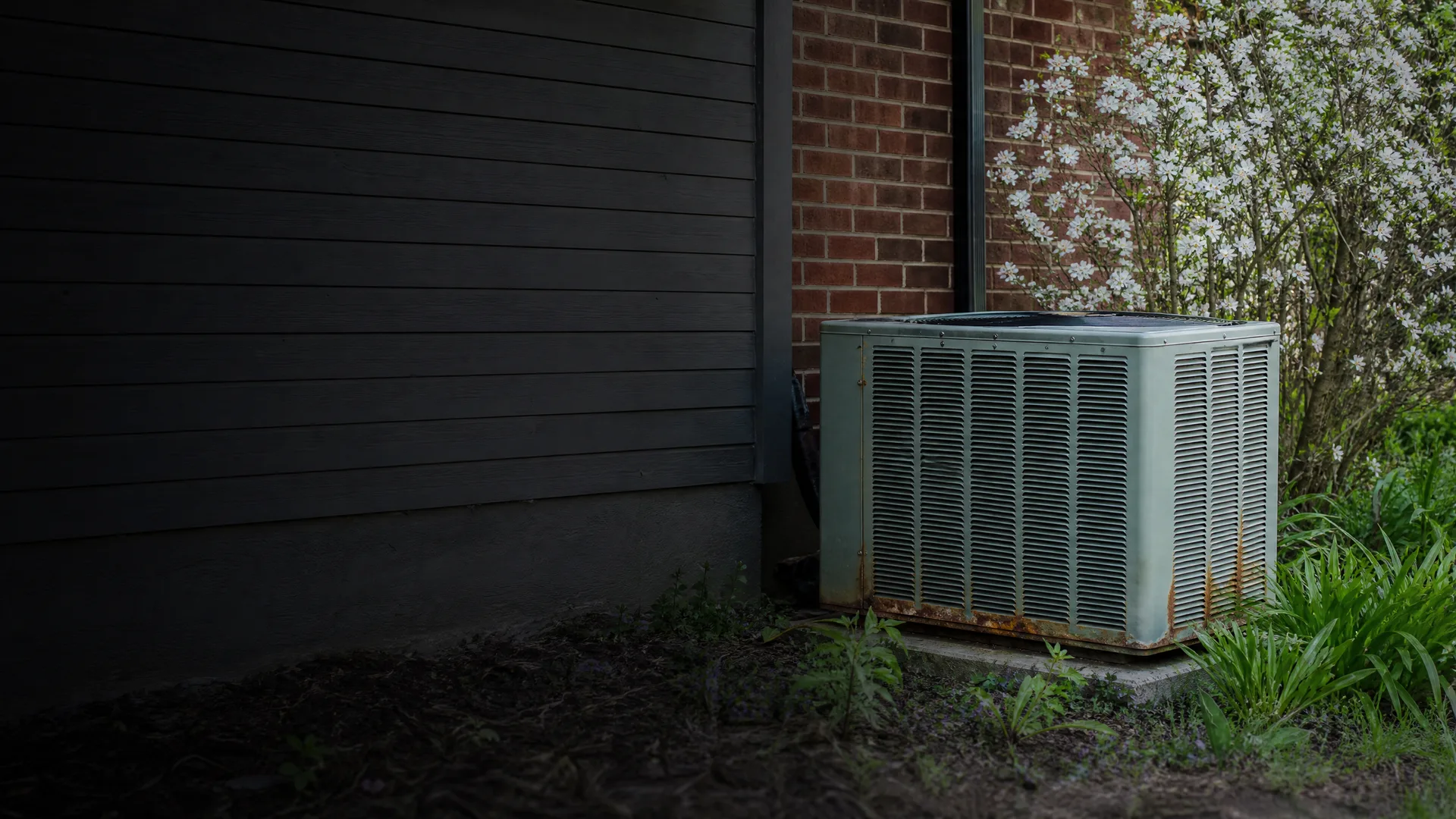
An outdoor air conditioning condenser unit on a concrete pad beside a dark horizontal-siding wall and a brick wall, with flowering shrubs and grass nearby.

The rust caught your eye before anything else did. You'd walked out to the side yard that April morning to check on the unit after a run of cold nights, and there it was, a thin orange line creeping along the base where the metal meets the pad. The grass around it had come back green already, but the unit looked like it had aged through the winter harder than the yard had. You crouched down and brushed a few stuck leaves off the coil, the ones that had blown in sometime back in January and never left. It ran fine that morning. But you stood there a minute longer than you meant to, wondering how many more cold snaps it had in it before that rust became something more than a mark on the base.


Send one request and you're done looking

Skip collecting and comparing quotes for the new heat pump.

It costs nothing to send, and you don't have to hire anyone.

A gray outdoor heat pump unit with a large fan grille sits on a concrete pad beside a house with horizontal lap siding, next to a green shrub, mulch bed, and lawn.

Running the way it should

This is a heat pump doing its job. The coil is clean, the area around it is clear, and air moves through it the way it's built to. On a cold morning it pulls heat out of that outside air and sends it through your house without a fight.

An outdoor air conditioning condenser unit with a top fan grille sits on a concrete pad beside a house with horizontal siding and a concrete step.

Fighting to keep up

Dust and grime have built up over the fins, and the grille is caked with debris. Air can't move through a coil like that the way it needs to, so on a cold night the system works harder and still falls short of what your thermostat is asking for.

Heat Pump Alone or With a Checkup First

Heat pump alone

  • Below freezing, it leans on a backup heat strip to make up the difference, and that strip uses more electricity than the compressor does.
  • You may feel the vents blow cooler air during defrost cycles, when the system pauses heating to melt frost off the outdoor coil.
  • A unit sized right for your house will still cycle on more often once the temperature drops into the 20s, because it has less heat to pull from the air.
  • If the outdoor coil is caked with leaves or grime, the system has to run longer to move the same amount of heat into your house.
  • An older unit, or one that was never sized for your square footage, is the one most likely to fall behind on the coldest mornings.

Heat pump plus checkup

  • A contractor can confirm the unit is sized for your house, which matters more in January than it does in July.
  • Clearing debris from the coil and checking the refrigerant charge before winter gives the system its full capacity to draw heat from cold air.
  • A working reversing valve and a defrost cycle firing on schedule keep the backup strip from running more than it has to.
  • Catching a worn part in the fall means it's not failing on the one morning you need the heat most.
  • Instead of calling around and comparing quotes yourself, the form on this page puts that search in someone else's hands.
  1. The thermostat calls for heat and the compressor starts.

  2. The reversing valve sends outside air through the coil.

  3. The coil pulls heat from that cold air into the refrigerant.

  4. Frost builds on the coil as it gets colder outside.

An outdoor air conditioner condenser unit on a concrete pad beside a house with horizontal lap siding, with a shrub to the left, bare dirt in front, and conduit and a metal disconnect box on the wall.
Before you get your heat pump installation
A gray outdoor condenser unit on a concrete pad beside a white horizontal-siding house, with refrigerant lines and conduit running to a wall-mounted disconnect box, bare soil in front and a green shrub at left.
After you get your heat pump installation
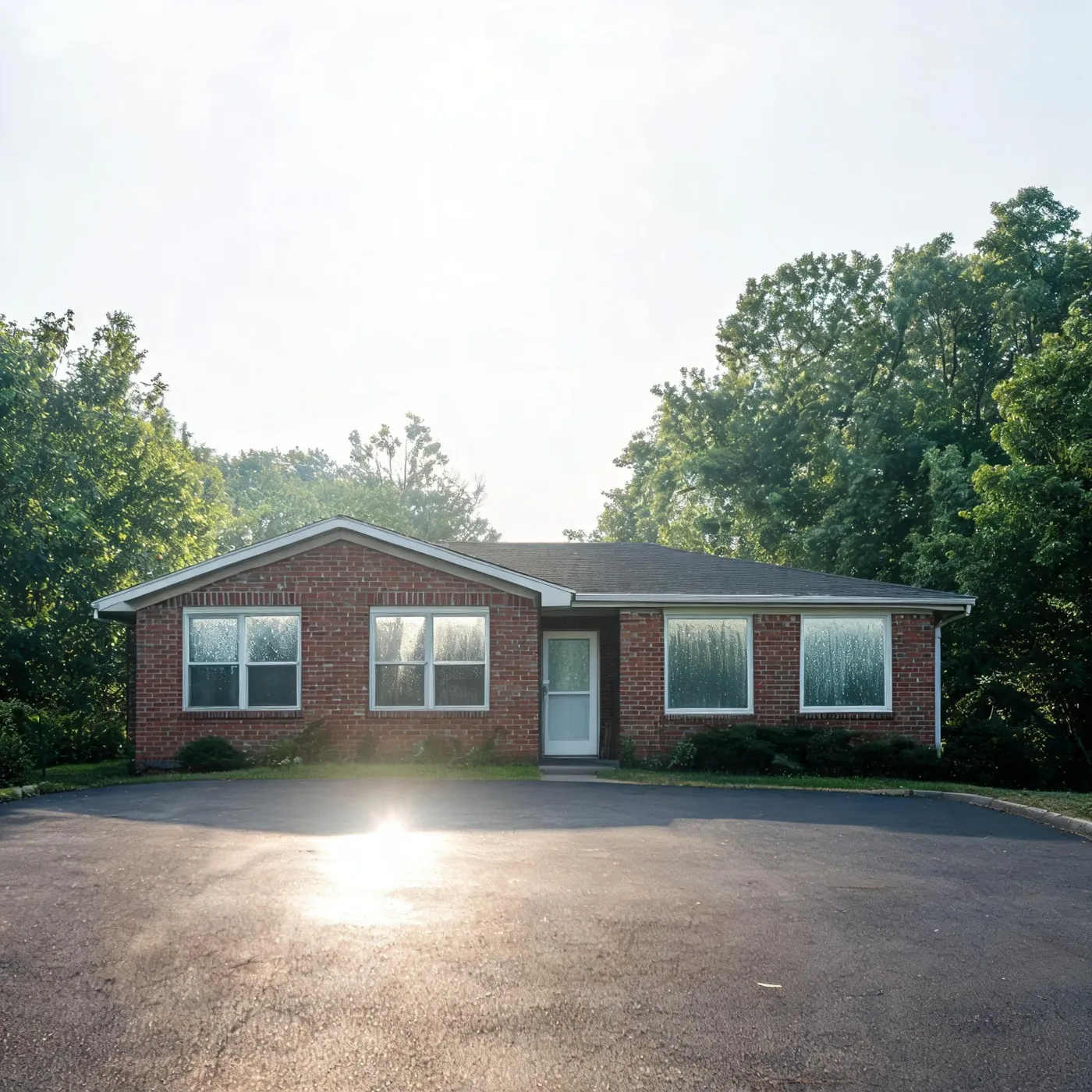
A single-story red brick ranch house with white-framed windows and a white storm door, fronted by a large asphalt parking area and backed by leafy green trees under a bright hazy sky.

That 69°F dew point in summer is a separate job from the one your heat pump does on a cold January morning, but it's the same machine doing both. All those muggy months pulling moisture out of the air put real hours on the compressor and the coil before winter even starts. A unit that's been working that hard all summer has less left to give when it has to switch over and pull heat out of cold air instead. If your heat pump is already older, this is part of why a cold snap can be the moment it falls behind.

NASA POWER T2MDEW county cells weighted by homes

What are you noticing about your heat pump right now

Maybe nothing yet, and you're just making sure before the next cold snap. Or maybe you've already caught something. The air from the vents feels lukewarm instead of warm. The unit outside runs for long stretches without shutting off. You hear it click into a different sound partway through, then quiet down like it's resting before starting again. Your electric bill came in higher than the cold outside seemed to justify. None of that means something is broken. But if it's been years since anyone looked at the unit, and it's working this hard just to keep the house at a normal temperature, that's wear adding up on a system you're relying on through the rest of winter.

A gray outdoor condenser unit on a concrete pad beside a beige vinyl-sided house, with a wall-mounted disconnect box, flexible conduit, mulch bed, shrubs and a concrete walkway in front.

Kept clear and running right

The coil on this one is clean and the lines to the disconnect are intact. Mulch is pulled back and nothing is leaning against the cabinet. Air moves through it the way it was built to, which is what lets it keep pulling heat out of the cold without straining.

An outdoor air conditioning condenser unit on a concrete pad beside a house with horizontal siding above a brick foundation, with a flexible conduit running to a wall-mounted disconnect box.

Dust, weathering, and no clearance

Dust has built up across the housing here and nothing's been done about it. A unit left like this has to work harder to move the same amount of air. On a cold morning that difference shows up as longer run times and less heat coming out of the vents.

Power costs 15.12 cents per kilowatt-hour statewide

At 15.12 cents a kilowatt-hour, every hour your heat pump leans on that backup strip instead of the compressor shows up on your bill. Keeping the system clean and sized right isn't just about comfort on a cold morning. It's what keeps those hours down.

EIA-861 2025 statewide residential average

Where that leaves your heat pump

  • A heat pump sized right and kept clean can handle a South Carolina winter, even when mornings drop into the 20s.
  • Longer run times and a strip of defrost steam are normal; a unit that won't climb past lukewarm air is not.
  • Grime on the coil, leaves against the base, or a few years of rust at the pad all make the system lean harder on backup heat.
  • A unit that matches your house doesn't need the backup strip nearly as often as one that's undersized or neglected.
  • Sorting out whether your system needs a repair, a cleaning, or a full install is easier with someone who can look at it in person.
  • Skipping the search for a contractor, the phone calls, and the back and forth on quotes means that answer comes without the legwork.

A heat pump can carry a South Carolina winter. That's the plain answer. Cold mornings in the 20s make it work harder, not impossible. It runs longer, it pulls a defrost cycle now and then, and the air at the vent might feel cooler for a few minutes while that happens. None of that means trouble. What means trouble is a unit that never gets past lukewarm, a coil caked with grime, leaves piled against the cabinet, or rust creeping along the pad after a few years outside. Those are the things that push a system onto its backup strip more than it should need, and that strip is the expensive way to make heat. A unit sized for your house and kept clean leans on that strip rarely. One that's undersized or neglected leans on it often, and you feel that in how the house holds heat and in what the system draws to get there.

The part that's hard to sort out on your own is which situation you're actually in. Lukewarm air could mean a dirty coil, a low charge, a unit that was never sized right for your house, or nothing at all, just a defrost cycle doing what it's supposed to do. Figuring out which one means climbing a ladder, calling around, explaining the same thing to three different companies, and comparing quotes that don't line up. Sending the form once means that work isn't yours to do. Someone who can look at the unit in person tells you straight whether it needs a cleaning, a repair, or a replacement sized for your house, and you're not the one chasing that answer down.

A gray outdoor condenser unit on a concrete pad beside a house with horizontal lap siding, bordered by mulch, shrubs and a mowed lawn.

Finding a pro stops being your job

Step 1 of 3: Equipment