Tell us about the job
Takes about a minute. No obligation.
Sizing a heat pump for Richland County starts with understanding what the heating season actually demands. Homes in Richland County, SC run heat about five months a year, from November through March. As outdoor temperatures drop toward their lowest point in January and February, a heat pump's output falls at the same moment the house needs it most. A contractor running a load calculation here has to establish both the peak heating load and the point at which a back-up heat source carries the difference, because undersizing either one leaves the homeowner short on the days that matter. Getting that balance right is the core installation decision.
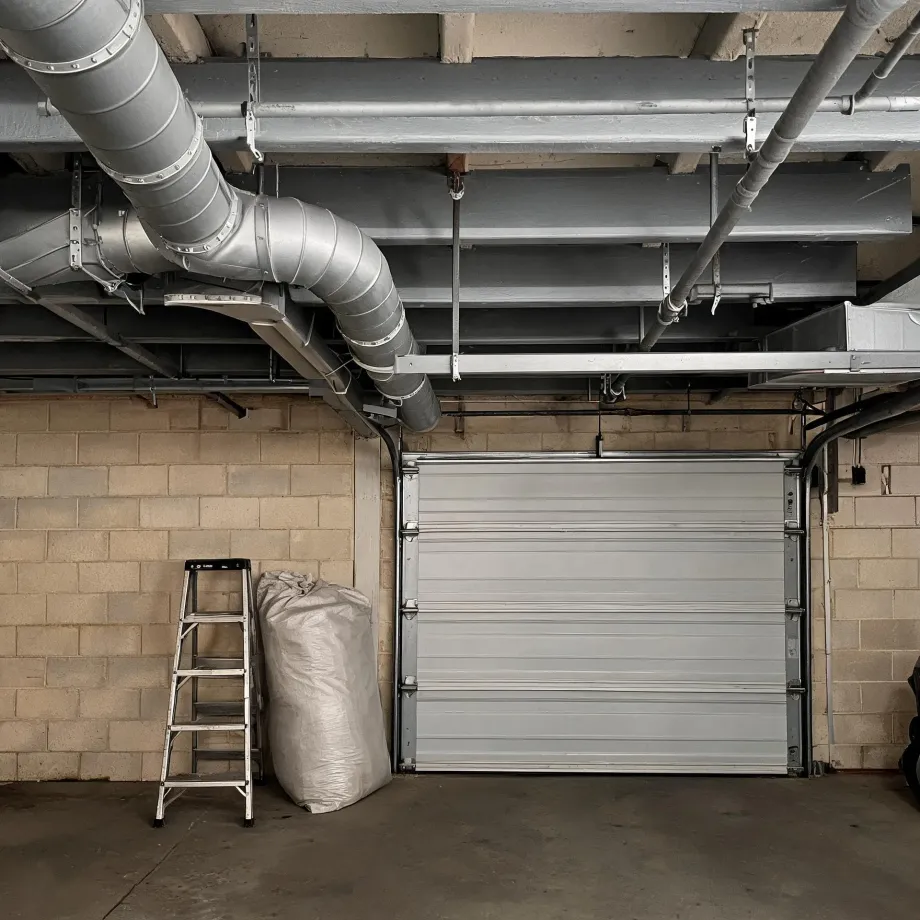
Ductwork designed for a furnace and central air setup moves air under different pressure and in different volumes than a heat pump needs. Half the homes in Richland County, South Carolina were built in 1989 or earlier (2020-2024 ACS 5-year). A contractor installing a heat pump in this county opens the job by checking whether the existing duct system can actually carry the new unit's airflow, and whether the electrical service will support the load. If the ducts are undersized, poorly sealed, or laid out in a configuration that fights the heat pump's operation, that is where the real work is. The unit on the wall or in the yard is a smaller question than what it has to push air through.
What Gets Installed With a New Heat Pump
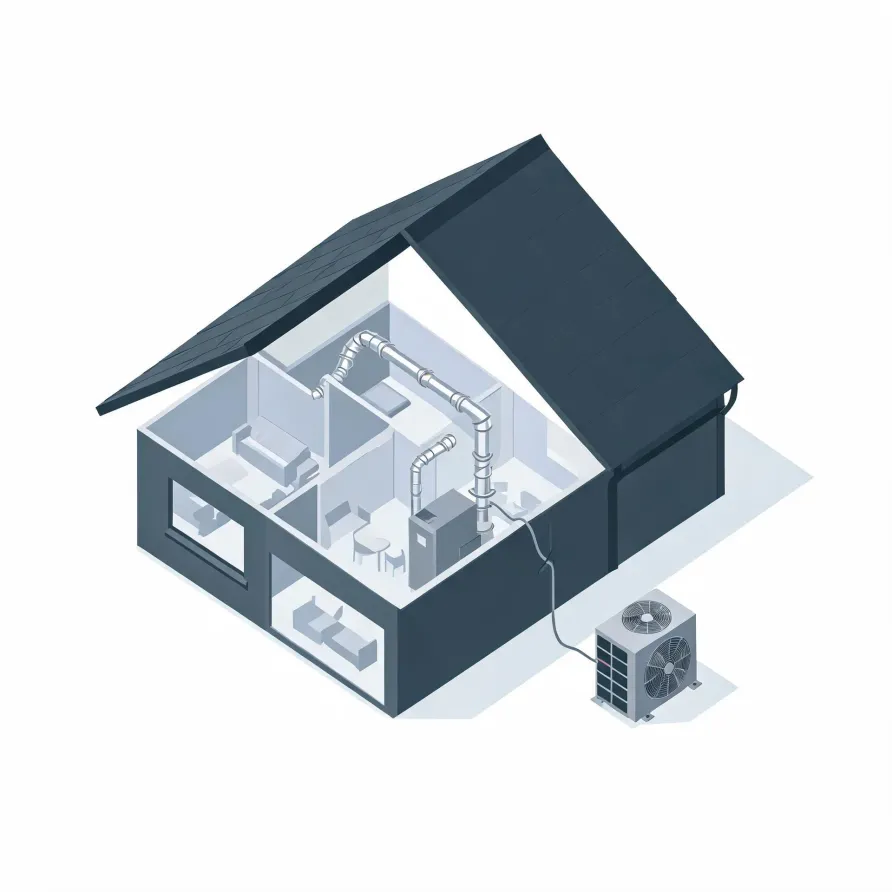
The outdoor unit sits on a pad beside the house and holds the compressor and the condenser coil. It is the largest piece of hardware a homeowner sees from the yard. The indoor air handler mounts in a utility space, closet, or attic and circulates conditioned air through the home.
A refrigerant line set runs between the two units, carrying refrigerant back and forth through insulated copper tubing. A thermostat goes on an interior wall where it reads the home's temperature and tells the system when to run. Some installations also include an auxiliary heat strip inside the air handler for backup heat on cold days.
The drawing shows a typical layout, and a licensed contractor determines exactly what applies to your house and how each piece gets positioned within it.
Get matched in Richland CountyRichland County, by the numbers
440 severe weather events were recorded in Richland County, South Carolina between 2015 and 2024.
NOAA National Centers for Environmental Information, Storm Events Database, bulk CSV export, events 2015-01-01 through 2024-12-31.Half the homes in Richland County, South Carolina were built in 1989 or earlier (2020-2024 ACS 5-year).
U.S. Census Bureau, 2020-2024 American Community Survey 5-Year EstimatesRichland County, South Carolina holds 187,611 housing units (2020-2024 ACS 5-year).
U.S. Census Bureau, 2020-2024 American Community Survey 5-Year EstimatesOwners occupy 60.3% of the occupied homes in Richland County, South Carolina (2020-2024 ACS 5-year).
U.S. Census Bureau, 2020-2024 American Community Survey 5-Year EstimatesHeat Pump Installation Rules on the Books for Richland County, South Carolina1 codes, standards, and statutes
Licensing and Legal Requirements in Richland County, South Carolina
South Carolina requires a mechanical contractor license for contracting work whose total cost of construction is greater than ten thousand dollars.
Severe Weather Events in Richland County
Weather patterns shape how hard heating and cooling equipment has to work, and how long it lasts. A heat pump sized and installed for local conditions holds up better than one treated as a generic solution.
440 severe weather events, 2015–2024. Source: NOAA National Centers for Environmental Information, Storm Events Database.