Tell us about the job
Takes about a minute. No obligation.
A heat pump contractor diagnosing a repair in Dillon County starts by looking at the components that carry the heating load: the reversing valve, the coil, and the refrigerant circuit. Homes in Dillon County, SC run heat about five months a year, from November through March. Compressors here cycle through cold months repeatedly, and by the time a homeowner calls, the reversing valve has often been switching direction through every cold snap in the season. Wear on that valve shows up as reduced heating capacity before it shows up as a hard failure, so a contractor checking refrigerant pressure and valve operation is not being thorough for its own sake. That is what the load history of this equipment actually calls for.
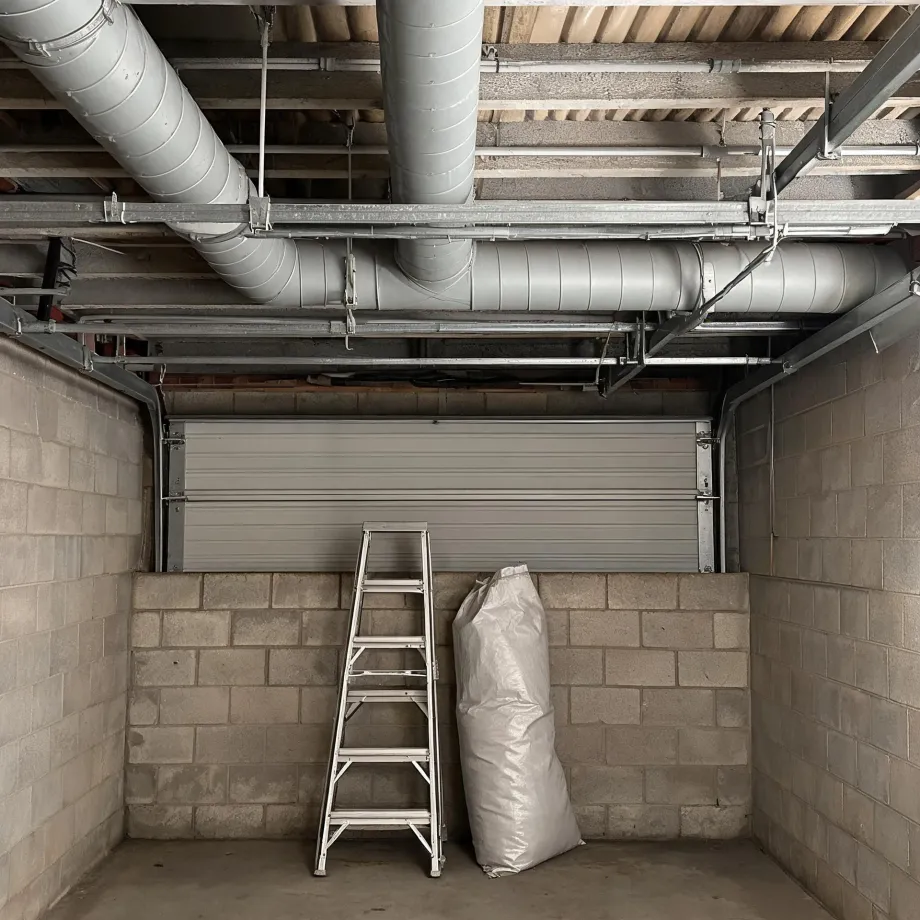
Ductwork that has been running since before heat pumps were common in this part of South Carolina carries its own repair agenda. Joints separate. Insulation compresses and gaps. A contractor opening a system for what looks like a refrigerant or coil problem frequently finds that the distribution side is where the real work is. Half the homes in Dillon County, South Carolina were built in 1984 or earlier (2020-2024 ACS 5-year). That gap between when the house was built and what runs in it now means a heat pump repair call here often turns into a ductwork assessment before the equipment quote is settled.
The Parts of a Heat Pump a Contractor Checks First
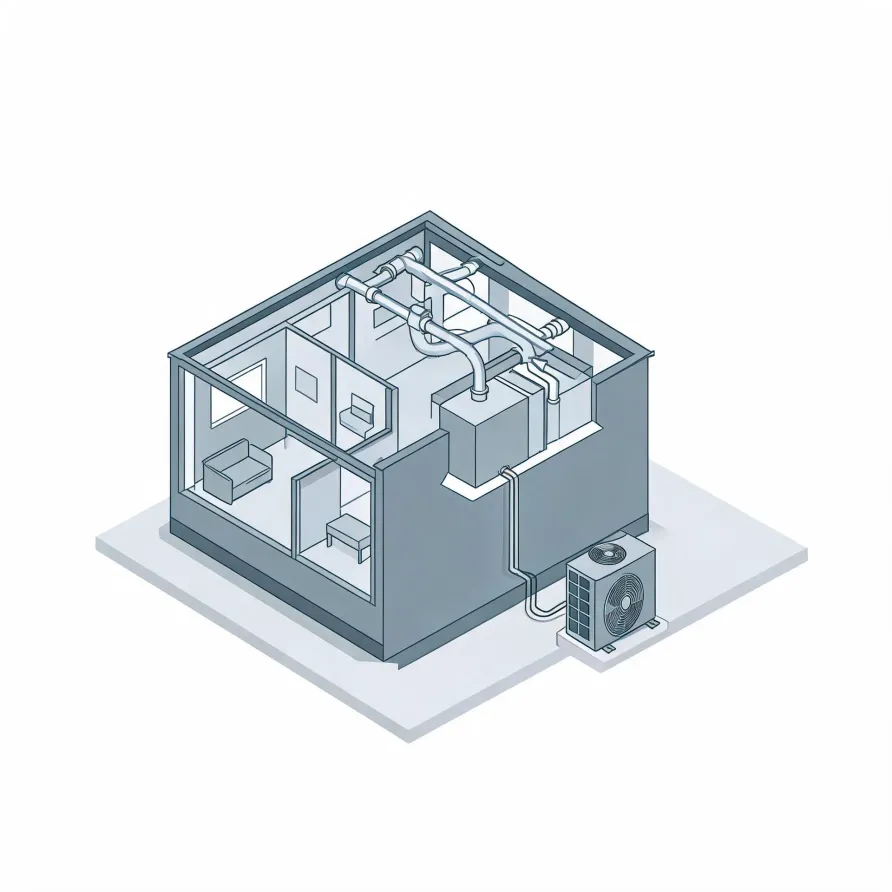
The outdoor unit sits outside the house and holds the compressor and the condenser coil. The compressor is the heart of the system, and when a heat pump stops moving heat, that unit is where a contractor looks first. A failed compressor, a refrigerant leak at the coil, or a seized fan motor in that cabinet will each kill the system in its own way.
Inside the house, the air handler contains the blower motor and the evaporator coil, and it is responsible for pulling air across the coil and pushing conditioned air into the living space. Connecting the two units is the refrigerant line set, and sitting alongside the air handler is the reversing valve, which is the component that lets a heat pump switch between heating and cooling. When a home runs warm in one season and cold in the other, that valve is what a contractor checks.
The drawing shows the general layout of a heat pump system, and a licensed contractor determines which components apply to your particular house and installation.
Get matched in Dillon CountyDillon County, by the record
48 severe weather events were recorded in Dillon County, South Carolina between 2015 and 2024.
NOAA National Centers for Environmental Information, Storm Events Database, bulk CSV export, events 2015-01-01 through 2024-12-31.Half the homes in Dillon County, South Carolina were built in 1984 or earlier (2020-2024 ACS 5-year).
U.S. Census Bureau, 2020-2024 American Community Survey 5-Year EstimatesDillon County, South Carolina holds 12,914 housing units (2020-2024 ACS 5-year).
U.S. Census Bureau, 2020-2024 American Community Survey 5-Year EstimatesOwners occupy 64.7% of the occupied homes in Dillon County, South Carolina (2020-2024 ACS 5-year).
U.S. Census Bureau, 2020-2024 American Community Survey 5-Year EstimatesCodes & Standards Behind Heat Pump Repair in Dillon County, South Carolina1 sourced rules & standards
Licensing Rules for HVAC Work in Dillon County, South Carolina
South Carolina requires a mechanical contractor license for contracting work whose total cost of construction is greater than ten thousand dollars.
Severe Weather Events in Dillon County
Extreme weather puts real stress on heat pump systems, which work hardest precisely when outdoor conditions are worst. How often that pressure hits in Dillon County shapes how much repair demand local equipment actually faces.
48 severe weather events, 2015–2024. Source: NOAA National Centers for Environmental Information, Storm Events Database.