Tell us about the job
Takes about a minute. No obligation.
A heat pump in Beaufort County runs its heating cycle through a real winter stretch, and the reversing valve, refrigerant circuit, and defrost controls take that load hard. Homes in Beaufort County, SC run heat about five months a year, from November through March. Capacity drops as temperatures fall, so those components cycle repeatedly through their full operating range rather than coasting. A contractor diagnosing a fault here checks the reversing valve and refrigerant charge early, because those are the parts that wear against a genuine heating demand. Coil condition and defrost board performance follow close behind.
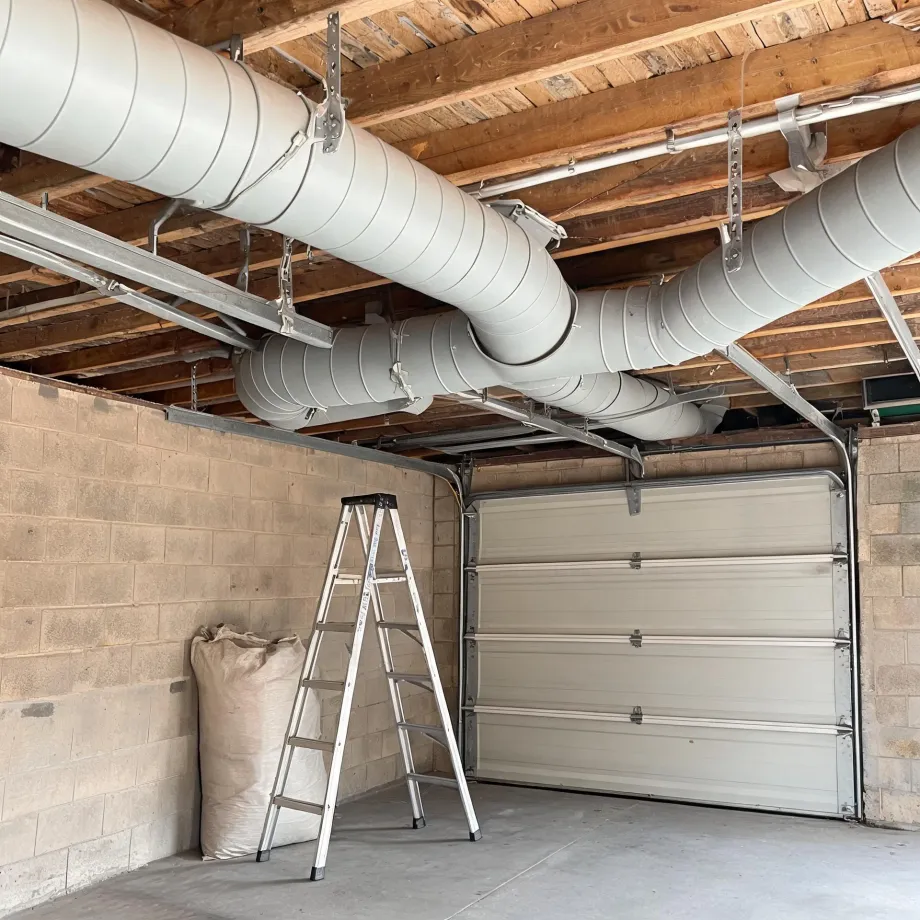
Ductwork in houses this old has been opened, patched, and rerouted through enough equipment generations that it reads as background noise by the time a contractor pulls a unit apart. The diagnosis lives inside the system: what the refrigerant circuit shows, what the electrical connections look like at the board and at the disconnect, whether the capacitor and contactor have given way to the coastal salt air. Half the homes in Beaufort County, South Carolina were built in 1999 or earlier (2020-2024 ACS 5-year). That vintage of stock has carried enough equipment by now that the house itself is rarely what stops a repair from going cleanly. The opened unit is where the answer is.
The Parts of a Heat Pump a Contractor Checks First
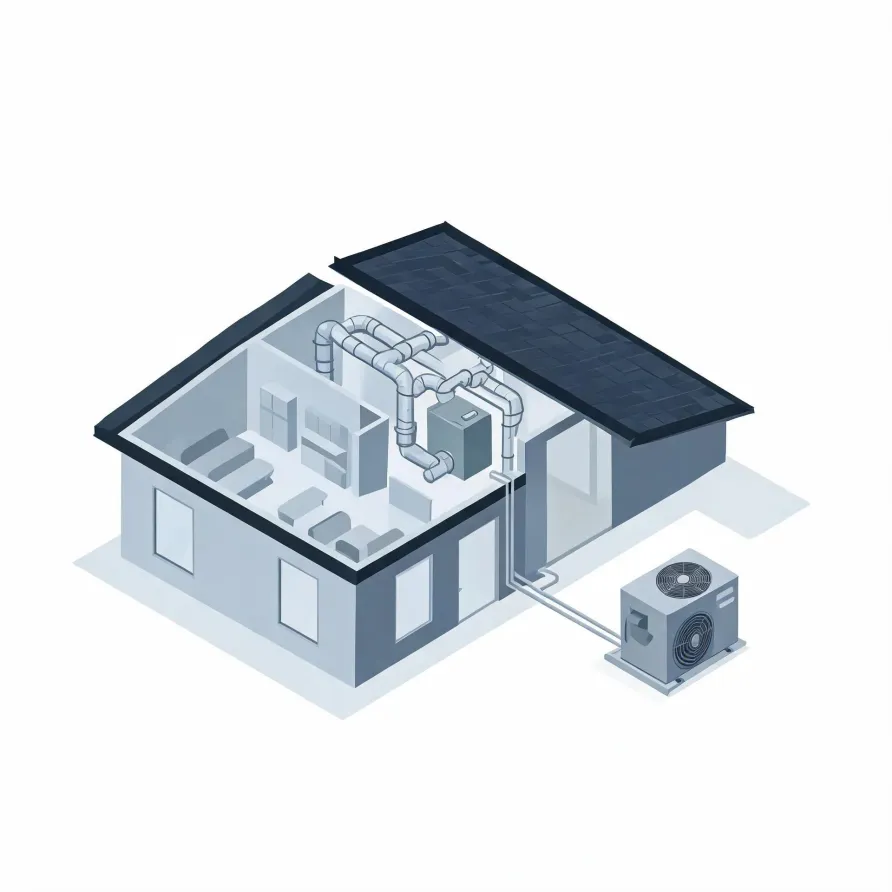
The outdoor unit is the piece most homeowners recognize on sight. It sits outside the house and holds the compressor, which does the heaviest mechanical work in the system, along with the condenser coil wrapped around it. When a heat pump stops doing its job, a contractor starts here, because a failed compressor or a damaged coil is often what has brought the system down.
Inside the house, the air handler holds the evaporator coil and the blower that moves conditioned air through the home. A reversing valve, which sits inside the system and is what allows a heat pump to work in both seasons, is another piece a contractor examines when the unit runs but heats or cools poorly. The refrigerant lines that connect the two units are also inspected, since a leak there affects everything else.
The drawing shows a typical layout, and a licensed contractor determines which components apply and what condition they are in for your specific house.
Get matched in Beaufort CountyBeaufort County, by the numbers
371 severe weather events were recorded in Beaufort County, South Carolina between 2015 and 2024.
NOAA National Centers for Environmental Information, Storm Events Database, bulk CSV export, events 2015-01-01 through 2024-12-31.Half the homes in Beaufort County, South Carolina were built in 1999 or earlier (2020-2024 ACS 5-year).
U.S. Census Bureau, 2020-2024 American Community Survey 5-Year EstimatesBeaufort County, South Carolina holds 103,177 housing units (2020-2024 ACS 5-year).
U.S. Census Bureau, 2020-2024 American Community Survey 5-Year EstimatesOwners occupy 75.9% of the occupied homes in Beaufort County, South Carolina (2020-2024 ACS 5-year).
U.S. Census Bureau, 2020-2024 American Community Survey 5-Year EstimatesCodes & Standards Governing Heat Pump Repair in Beaufort County, South Carolina1 sourced rules & standards
Licensing and Legal Requirements in Beaufort County, South Carolina
South Carolina requires a mechanical contractor license for contracting work whose total cost of construction is greater than ten thousand dollars.
Severe Weather Events in Beaufort County
Beaufort County's climate puts real strain on heat pump systems, which run year-round to handle both heating and cooling loads. Weather stress is one of the main reasons local equipment needs repair, and the record below shows what the area's conditions actually look like over time.
371 severe weather events, 2015–2024. Source: NOAA National Centers for Environmental Information, Storm Events Database.