Tell us about the job
Takes about a minute. No obligation.
A heat pump working through a Sumter County winter is asking its compressor and reversing valve to move heat in the direction they find hardest. Homes in Sumter County, SC run heat about five months a year, from November through March. When outdoor temperatures drop, the refrigerant circuit has to work harder to extract heat from cold air, and that sustained effort is where components accumulate wear. A contractor diagnosing a repair here checks the reversing valve first, because that part cycles with every mode switch and cold spells accelerate its fatigue. Back-up heat strips also need to be sized and tested, since a heat pump losing capacity in February leaves a homeowner without a fallback.
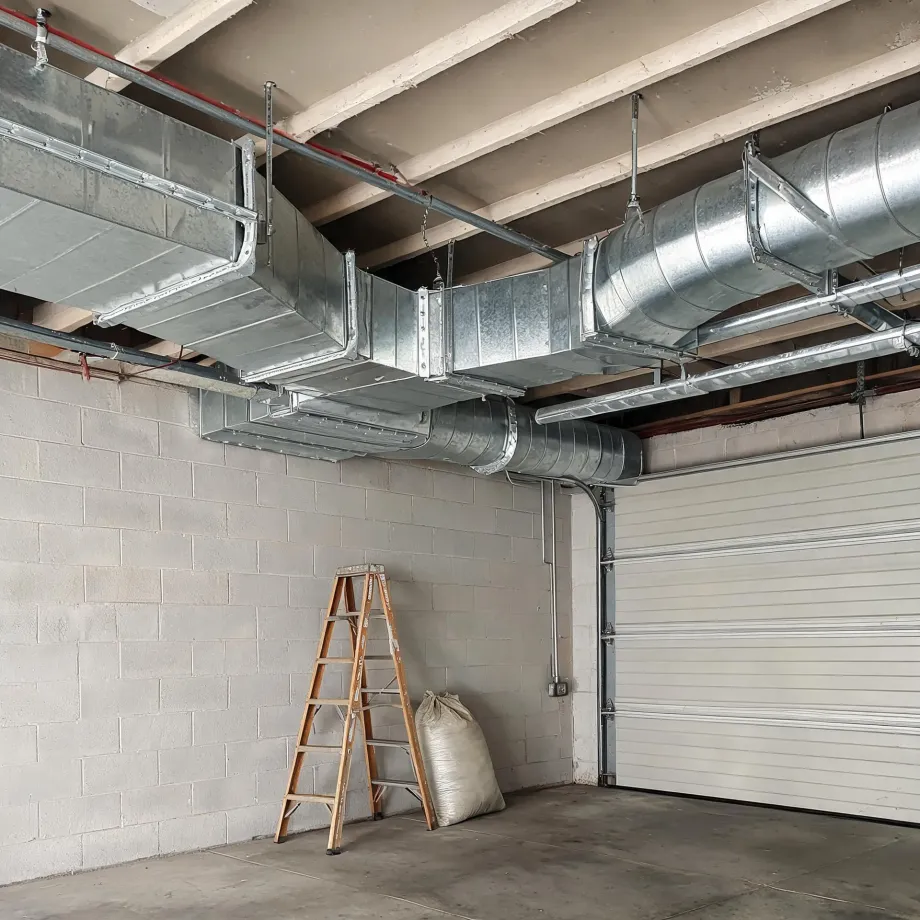
Ductwork in a house built for an earlier generation of equipment tends to carry decades of patched seals, resealed joints, and insulation that no longer meets its rated value. Half the homes in Sumter County, South Carolina were built in 1987 or earlier (2020-2024 ACS 5-year). That history matters for heat pump repair because refrigerant-side faults and duct-side faults produce similar symptoms, and a contractor who opens the unit without checking the duct system first can fix the component and leave the real load on the next one. What the opened unit actually shows, compressor wear, refrigerant loss, contactor condition, determines the repair. What the duct system shows determines whether that repair holds.
The Parts of a Heat Pump a Contractor Checks First
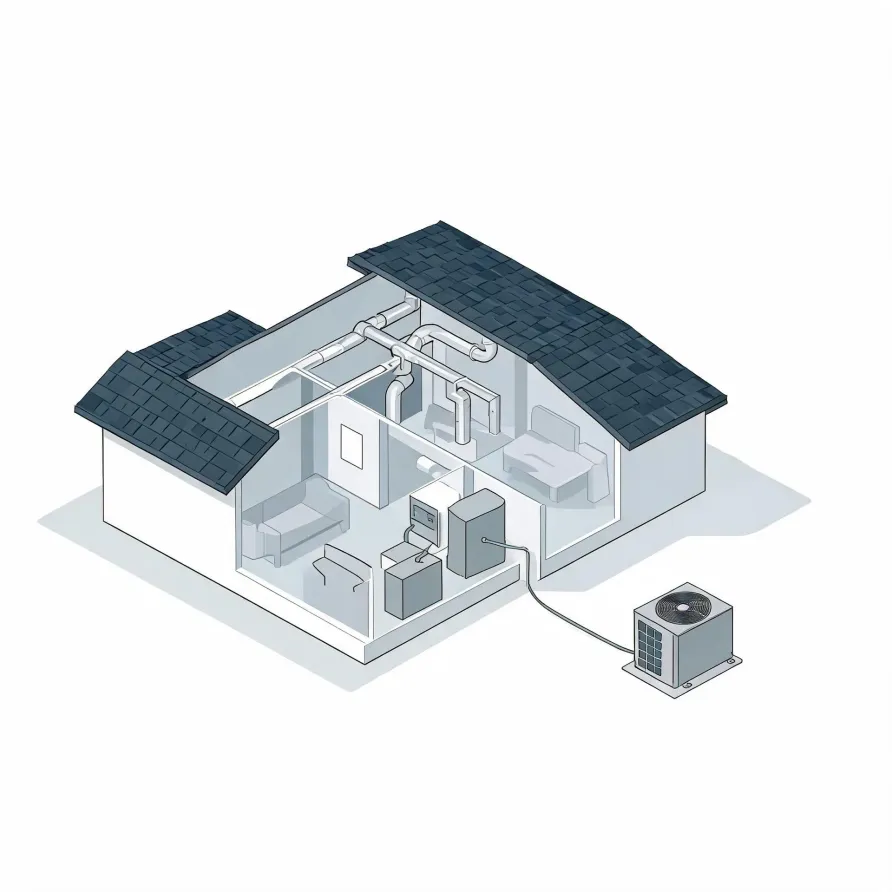
The outdoor unit is usually the first thing you notice, sitting on a pad beside the house. It holds the compressor and the outdoor coil. The compressor is the part contractors go to early when a heat pump stops moving heat or starts cycling oddly, and the coil is examined when the system runs but performance has dropped.
Inside the house, the air handler contains the indoor coil and the blower that pushes conditioned air through the home. The reversing valve, which lives in the outdoor unit, is the piece a contractor checks when the system heats in cooling mode or cools in heating mode. The refrigerant lines that run between both units carry the working fluid and are inspected for leaks whenever refrigerant loss is suspected.
The drawing shows a typical layout, and a licensed contractor determines what applies to your specific home and equipment.
Get matched in Sumter CountySumter County, by the numbers
235 severe weather events were recorded in Sumter County, South Carolina between 2015 and 2024.
NOAA National Centers for Environmental Information, Storm Events Database, bulk CSV export, events 2015-01-01 through 2024-12-31.Half the homes in Sumter County, South Carolina were built in 1987 or earlier (2020-2024 ACS 5-year).
U.S. Census Bureau, 2020-2024 American Community Survey 5-Year EstimatesSumter County, South Carolina holds 47,582 housing units (2020-2024 ACS 5-year).
U.S. Census Bureau, 2020-2024 American Community Survey 5-Year EstimatesOwners occupy 68.1% of the occupied homes in Sumter County, South Carolina (2020-2024 ACS 5-year).
U.S. Census Bureau, 2020-2024 American Community Survey 5-Year EstimatesCodes & Standards Behind Heat Pump Repair in Sumter County, South Carolina1 sourced rules & standards
Licensing Rules That Apply in Sumter County, South Carolina
South Carolina requires a mechanical contractor license for contracting work whose total cost of construction is greater than ten thousand dollars.
Severe Weather Events in Sumter County
Extreme weather puts heat pumps under stress they were not sized to absorb continuously, and that stress shows up as repair calls. Knowing how often Sumter County sees disruptive weather conditions gives you a realistic picture of what the equipment here actually endures.
235 severe weather events, 2015–2024. Source: NOAA National Centers for Environmental Information, Storm Events Database.