


Running the way it should
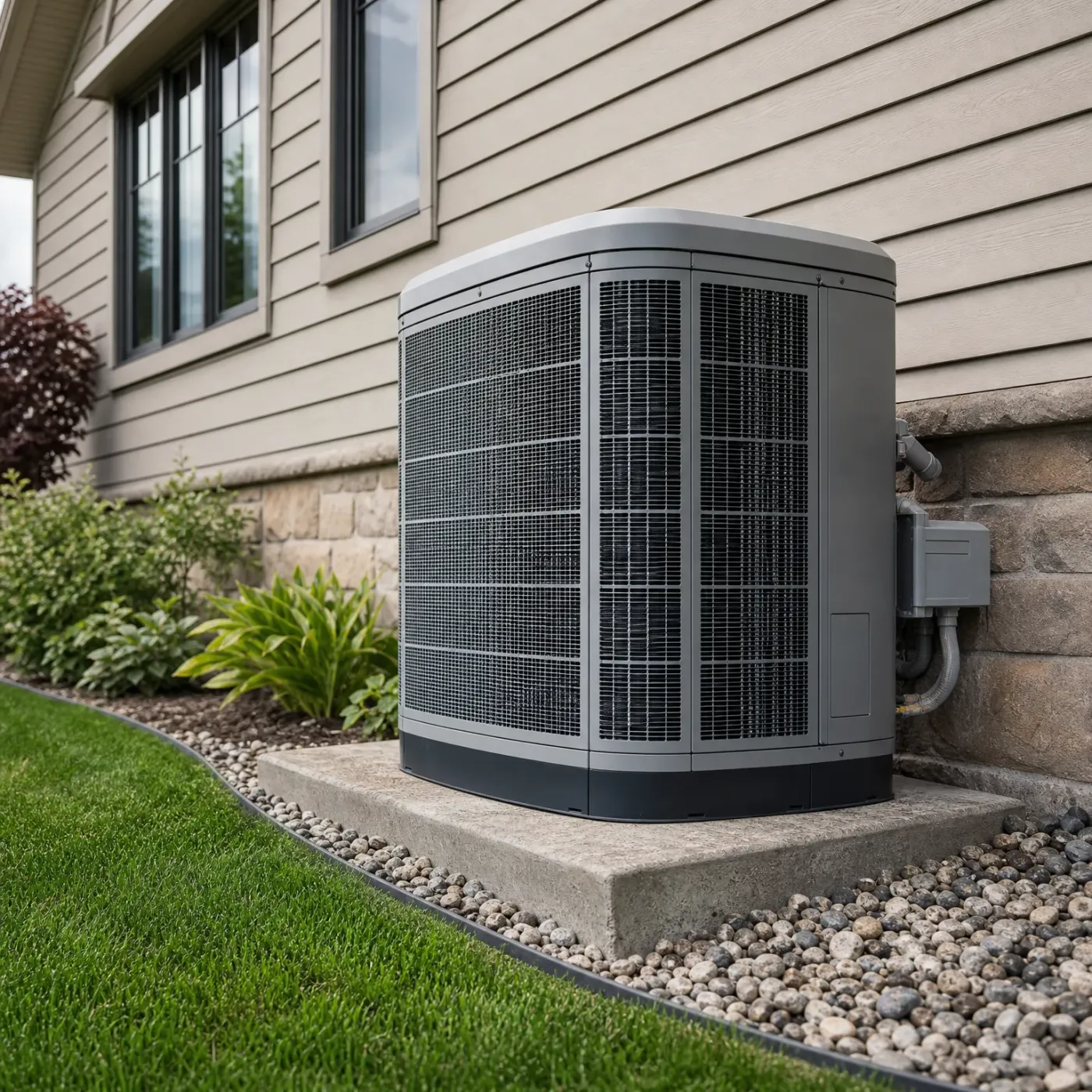
A heat pump that's keeping up looks like this. It sits level on its pad, the fan turns freely, and the lines running to the disconnect are tight and intact. No ice on the coil, no strain in the sound it makes.
A local installer who puts in heat pumps gets your project.
Find a pro near meYou rely on your heat pump to keep the house comfortable through a muggy summer and whatever winter brings, and you're wondering how many more years you can count on it, or whether the one at a new place is already closer to the end than the beginning.
A heat pump in South Carolina runs most of the year, since most homes here heat with electricity and lean on the same system for summer cooling and winter heat. That year-round use wears on it faster than a furnace that only runs part of the year. Humidity adds to the load too. A system working to pull moisture out of thick summer air runs longer hours, and the outdoor unit sits outside in that same humidity all year. By the time a heat pump reaches 15 years here, it has usually logged more operating hours than the same age system would in a drier or milder climate. Once a system passes that mark, a breakdown is less an accident than a sign it's reaching the end of what it can reasonably be asked to do.
Your heat pump runs almost every month of the year here.
The outdoor unit works hardest from June through September cooling the house.
It reverses in winter, pulling heat from outside air into your home.
That constant switching and year-round run time wears the compressor down faster.

Running almost every month, your heat pump doesn't get the slow season an all-gas furnace would get up north. That shows up as a system that wears closer to the early end of its range, and one you want checked before it fails on the hottest week of August or a cold snap in January, not after. A unit that's short cycling, running longer than it used to, or struggling to keep the house at the temperature you set it to is telling you something about where it stands.
If your heat pump is getting on in years, or you're moving into a place where you don't know its history, it's worth finding out where it stands before you need it most. A contractor who knows South Carolina homes can look at your actual unit, how it's been run, and what shape it's in, and give you a straight answer instead of a guess. Getting matched with someone who takes that off your hands means you're not the one tracking down who to call when the time comes.


A heat pump that's keeping up looks like this. It sits level on its pad, the fan turns freely, and the lines running to the disconnect are tight and intact. No ice on the coil, no strain in the sound it makes.

Look for rust creeping up the cabinet, a disconnect box that's come loose from the wall, or a unit that's started leaning on its pad. Weeds growing up through the base mean it hasn't been looked at in a while.


After you send the request, you're done searching.
Get in touch with a local installer about a new heat pump.
No charge to send it. You decide if you hire them.




Your heat pump moves heat instead of making it, and a few parts carry that load. The outdoor fan and compressor run direct drive, so there's no belt in the picture at all. When you switch from cooling to heat, a reversing valve is what makes that happen, and it's moving every time your thermostat changes modes. On cold, damp mornings you might notice the outdoor unit pause and seem to run backward for a few minutes. That's the defrost cycle, melting ice off the coil before it goes back to heating. Refrigerant should stay at the same level for the system's whole life. If a contractor finds it low, that means a leak somewhere in the lines or the coil, not normal use. The compressor itself is sealed. Nobody opens it to fix something inside, so when it fails, the outdoor unit gets replaced. Keeping that outdoor coil clean matters more than it seems. A dirty coil makes the compressor push harder for the same result, and that extra strain adds up over the years.


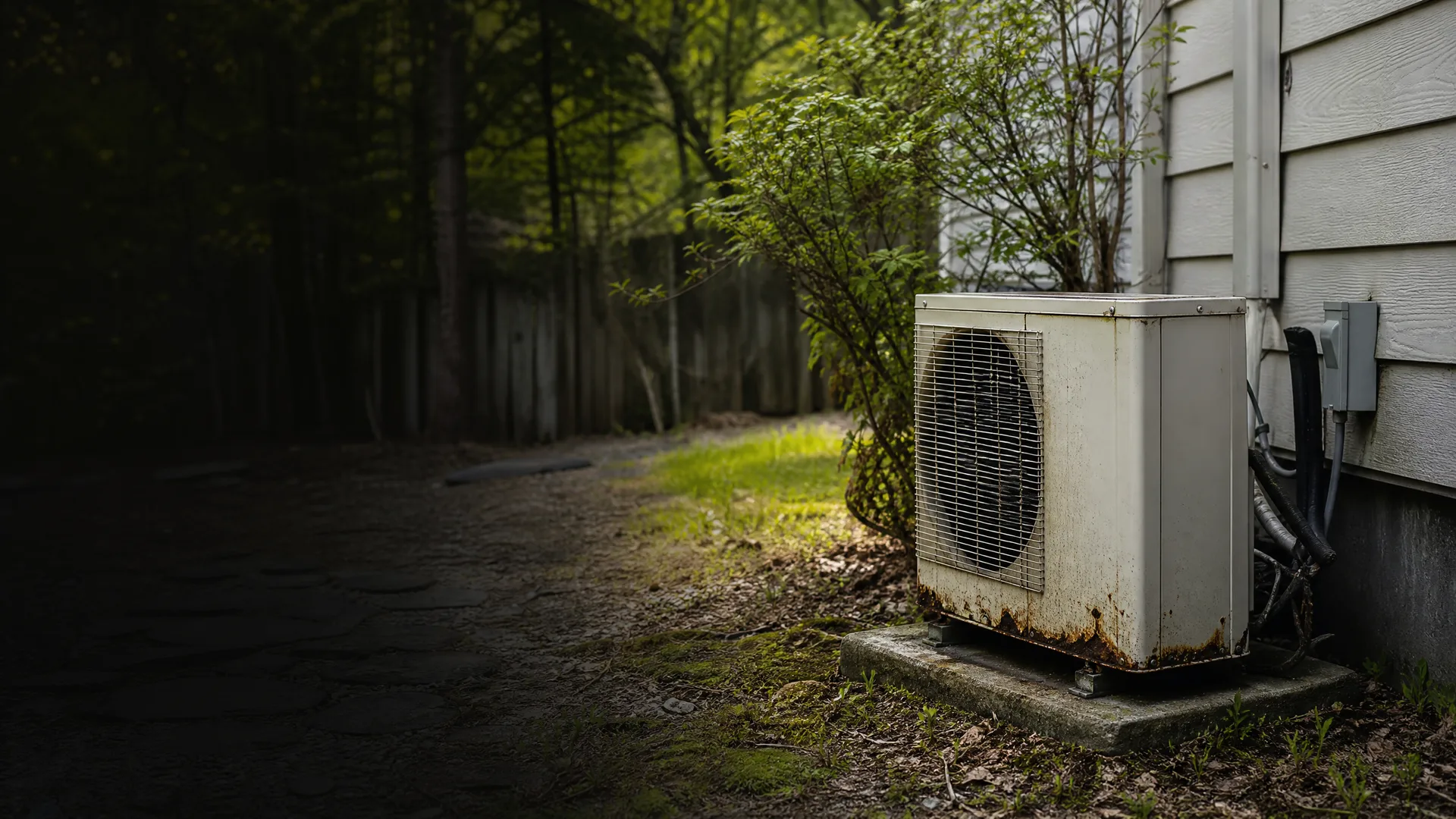
You're out in the side yard on a mild spring afternoon, coiling up the garden hose, when you walk past the outdoor unit and actually look at it for the first time in a while. The base is rusted along the bottom edge, flaking where the metal meets the pad. You crouch down and run a thumb over it. The fan isn't running right now, nothing's wrong at this exact second, but the rust makes you wonder how the inside looks, the coil, the compressor, the parts you can't see from here. You straighten up, glance toward the house where everyone's inside, and make a note to get someone to look at it before summer puts it to work again.
At 15.12 cents a kilowatt-hour, that's about what most of the state pays, so an aging heat pump pulling more power to keep up doesn't hide on your bill. A unit nearing the end of its run costs you more to heat and cool the same house.
EIA-861 2025 statewide residential average

This one sits level on its pad, with clean siding and gravel around the base that hasn't shifted. The conduit running up to the disconnect box is straight and solid. A unit like this is still handling the summer heat and the winter switch-overs without a fight.

This one's older, the casing weathered and dull where it meets the wall. The conduit still runs to the disconnect box, but a unit that's been through this many South Carolina summers is working harder for the same result. It's worth having looked at before it quits on you.
A heat pump running in South Carolina earns its keep year round, and most of them give you somewhere around a decade and a half before the wear catches up to them. Some go longer with a clean coil and a clear base. Some go shorter if the airflow's been choked off or the defrost cycle has been fighting ice all winter. You've seen what holding up looks like and what falling behind looks like, and you know which one is sitting in your side yard right now. If it's closer to the second, you don't have to spend your afternoons researching contractors or comparing quotes to figure out what to do next. Send the form, and the work of finding someone who can look at your unit and tell you where it stands is off your plate. Whether that means a repair that buys you a few more summers or a new system installed before the old one quits on you in July, that part gets handled by someone who does this for a living, not by you.
Send the form and the search for an installer is over.