




Profile view of a bearded man wearing a dark green baseball cap and a dark gray T-shirt against a plain light background.

What defrost mode means on a South Carolina heat pump

Step 1 of 3: Equipment

Why does my heat pump blow cold air and act weird sometimes?

You walk outside and see steam or frost coming off the outdoor unit, and the air inside feels cool instead of warm. It usually happens on a cold morning or after a hard freeze overnight. It can look like a breakdown, but there's a decent chance the system is just doing something it's built to do, for a short stretch of time.

It's clearing frost off the outdoor coil

A heat pump moves heat from the outside air into your house, and in cold, damp weather that outdoor coil can ice up. When it does, the system reverses itself for a few minutes, sends heat outside to melt the frost, and that's why the air coming out of your vents turns cold and the outdoor fan may stop. South Carolina winters don't get bitter cold often, but the nights that dip near or below freezing, especially with any humidity in the air, are exactly when this shows up. If it happens on a cold night and clears up on its own within ten or fifteen minutes, that's normal. If the cold air keeps blowing, or the outdoor unit stays covered in ice afterward, something in that cycle isn't resetting the way it should.

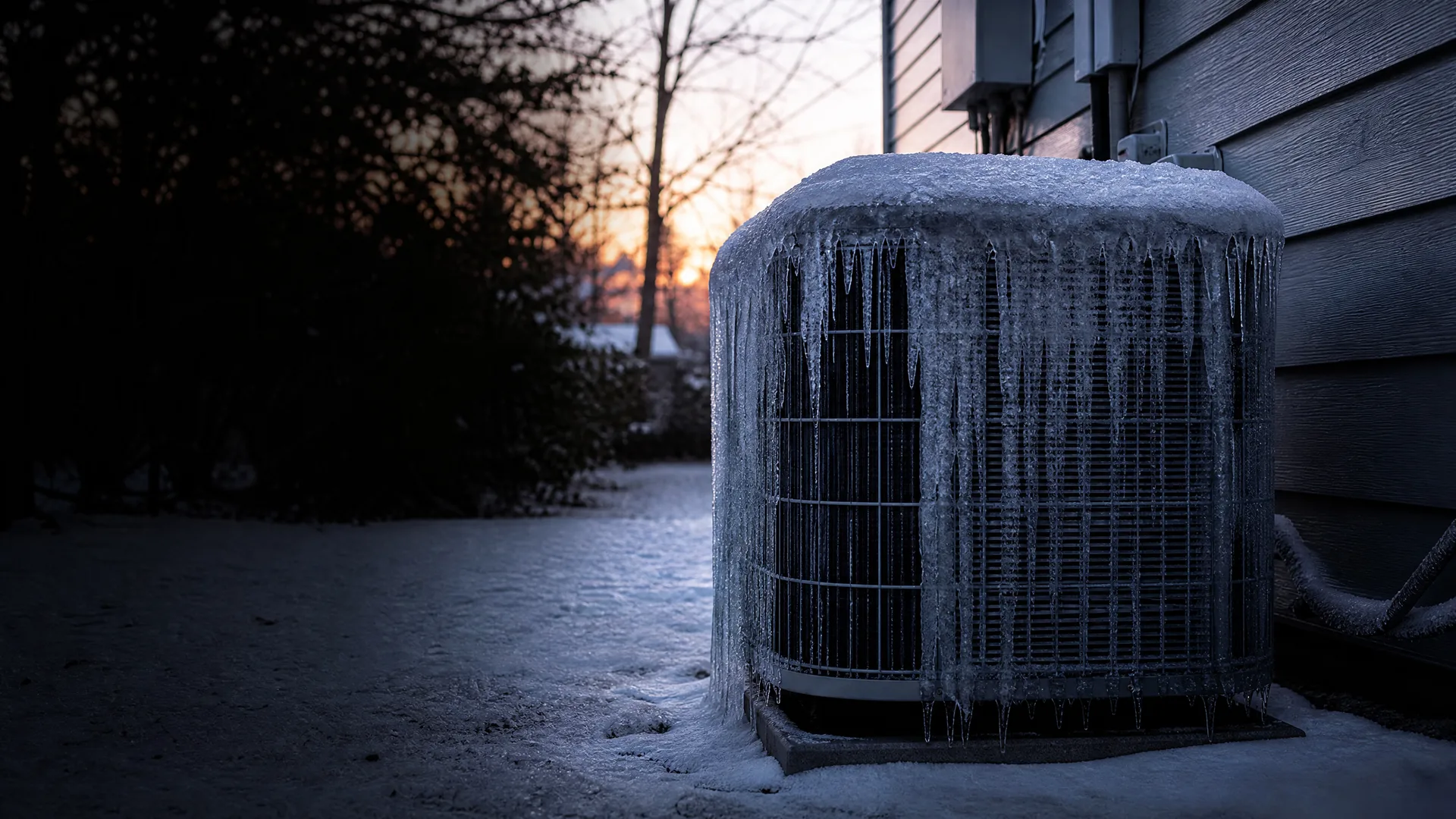
An outdoor condenser unit beside a horizontally sided house, encased in thick ice with hanging icicles, on snow-covered ground at dusk with bare trees and a sunset behind.

You step out for the paper and see it first, the way the morning light catches the ice. The outdoor unit is coated white, thick around the coil, and the fan on top sits still. It's January, just past sunrise, cold enough that your breath shows. Inside, the air coming through the vents felt cool a few minutes ago, not warm, and that's what sent you out here. You stand in the side yard in your coat, looking at the unit, waiting to hear it click into defrost and the fan start again. Right now it's just quiet, and the ice keeps catching the light.

Normal Defrost Or a System Stuck in It

Normal Defrost

  • The cycle usually runs for a few minutes and shuts off on its own once the coil clears.
  • You'll hear the outdoor fan stop and may notice a hissing or whooshing sound as the system reverses.
  • Steam rising off the coil as the frost melts is normal, not a sign of a leak or fire.
  • Warm air inside the house may feel cool or stop blowing for a short while during the cycle.
  • The outdoor unit should return to blowing warm air and the fan should start spinning again once it ends.
  • This happens more often on cold, damp mornings in the 30s and low 40s, when frost forms fastest.

Stuck Or Failing

  • Thick ice builds up on the coil, lines, or base of the unit instead of a light frost.
  • The outdoor fan stays off and the unit stays iced over for an hour or more without clearing.
  • Cold air blows inside the house for longer than a defrost cycle should last.
  • The unit cycles into defrost repeatedly within a short span instead of only when frost actually builds up.
  • A failed defrost sensor, control board, or reversing valve can keep the system from switching back to heat.
  • Ice spreads to the ground or nearby pipes, which points to drainage or airflow trouble beyond normal frost.
  1. Frost builds on the outdoor coil during cold, humid weather

  2. A sensor or timer tells the system ice has formed

  3. A reversing valve switches the system to air conditioning mode briefly

  4. Hot refrigerant flows outside to melt the frost off the coil

A smiling man in a navy long-sleeve shirt sits at a wooden table in a kitchen and dining area, with a ceramic mug, a potted plant, and a sliding glass door behind him.
A smiling bearded man in a green henley shirt stands at a kitchen island with a gray mug, looking off to the side, with a dining area and shelves blurred behind him.
A smiling bearded man in a navy sweater sits at a white kitchen island with a ceramic mug, with open shelves, potted plants and a range hood behind him.
A smiling man in a dark olive long-sleeve shirt sits in a kitchen beside a counter with a dark mug, with a dining table, sideboard and hallway visible in the blurred background.

Hand off the search today

If your heat pump is stuck in defrost, blowing cold air for more than ten or fifteen minutes, or cycling into defrost over and over on a mild day, something is off. A stuck reversing valve, a bad defrost sensor, or a failing control board can all cause it, and none of them clear up on their own. Meanwhile you're heating a South Carolina home with electric heat, and a heat pump running wrong costs you more every day it sits broken. You don't need to track down who in your area actually works on heat pumps instead of just furnaces. Send the request and it goes to one licensed local contractor who handles this equipment all year, knows what tends to fail on these systems, and can tell you on sight whether it's the valve, the sensor, or the board. No chasing five different companies. One call, to someone who already knows what a heat pump stuck in defrost usually means.

How the Defrost Board Decides

  • The defrost board checks the outdoor coil every 30, 60 or 90 minutes depending on how it's set.
  • A thermistor clipped to the coil has to read below a set temperature, usually around 32°F, before defrost is allowed to start.
  • Both conditions have to be true at the same time: the timer has to hit its mark and the coil has to be cold enough.
  • During defrost, a small circuit board also turns on the backup heat strips so the air blowing inside stays warm.
  • Once the coil sensor reads a set temperature again, usually around 60 to 70°F, the board ends the cycle and switches back to heating.
  • If that coil sensor fails or reads wrong, the board can't tell when the coil is clear and the cycle runs long or never ends.

The outdoor unit runs on a timer and a sensor working together, not on a guess. A small board checks the clock first, usually every 30, 60 or 90 minutes depending on how the system is set. That alone doesn't start anything. A thermistor clipped onto the outdoor coil has to read cold, around 32°F, at the same moment the timer hits its mark. Only when both are true does the board open the reversing valve and send hot refrigerant outside to strip the frost off the coil. While that's happening, the system is technically in cooling mode outside, which is why the air inside your house would feel cool if the backup heat strips didn't kick on to cover it. That's the board's job too, firing the strips the moment defrost starts so the vents don't blow cold. The cycle isn't timed to end. It ends when the coil sensor reports the coil has warmed back up, usually somewhere around 60 to 70°F, and at that point the board closes the valve, shuts off the strips, and goes back to pulling heat from outside like normal. The whole thing depends on that one sensor reading correctly. If it's reading too cold, the board thinks the coil is still frozen and keeps the cycle running past when it should stop. If it's stuck reading warm, defrost might not fire at all, even with a coil buried in ice.

Power costs 15.12 cents per kilowatt-hour statewide

Defrost mode runs your heat pump in reverse, and that pulls more power than regular heating. At 15.12 cents per kilowatt-hour, a heat pump stuck defrosting over and over, instead of the few minutes it should take, adds up fast on your bill. Short, occasional cycles barely register.

EIA-861 2025 statewide residential average

Why South Carolina heat pumps defrost at all

A heat pump defrosts because the outdoor coil gets cold enough to pull moisture out of the air, and that moisture freezes on the metal. South Carolina winters don't get as cold as some places, but the nights that dip near freezing are often damp ones, and damp cold builds frost faster than dry cold. That's why defrost tends to show up on raw, foggy mornings rather than the coldest, driest stretch of January. The system is built to handle this normally. It's only a concern when it's happening more often than the weather accounts for.


What a healthy cycle looks like

A working defrost cycle is short and quiet in the sense that nothing else about the system changes. The fan stops, you might hear a whoosh as the valve reverses, steam rises off the coil, and within a few minutes the fan kicks back on and heat resumes inside. Most homes here heat with electricity, so that brief reversal shows up as a small, normal part of the system's work, not as a separate event worth worrying about. If it ends on its own and the house warms back up right after, the cycle did its job.

A smiling man in a dark blue T-shirt sits on a light gray sofa in a living room with a wooden shelf and window behind him, with a laptop edge visible in the foreground.
A bearded man in a plaid flannel shirt sits indoors looking out a window at snow-covered trees, with a steaming mug on the sill and wooden kitchen shelves behind him.

A few minutes of steam and a quiet fan is just your heat pump clearing its coil. Stuck cold air, repeat cycling on a mild day, or defrost that won't shut off is the system telling you something failed, usually the reversing valve, the defrost sensor, or the control board. That's a repair, not something to wait out through another cold night. When you send the request, it goes to one licensed contractor local to South Carolina, someone who works on heat pumps all winter and knows what tends to fail on these systems after a hard freeze. You won't field calls from a handful of companies trying to win the job. You'll hear from the one who's already set to look at it.

A dark wood cabinet with a drawer and black knob holds a ceramic vase of green leafy branches and a wooden bowl, beside a window with a woven basket of knit blankets.
Sunlit interior corner with white baseboard molding, cream walls, a wood floor, a woven jute rug, and a potted green plant on a window sill with trees visible outside.
Sunlight falls across a marble countertop by a window, where a small stone bowl with pebbles sits beside a potted pothos plant in a ceramic planter and a folded beige towel.
Exterior corner of a house with lap and shingle-style siding, a white gutter and downspout with offset elbows, a stone veneer base, a window at right, and flowering hydrangea shrubs at lower left in warm low-angle light.
A wooden console cabinet with a caned front holds a ceramic vase of green leafy branches and a shallow wooden bowl, below a framed landscape print on a beige wall beside a curtained window.

Hand off the heat pump problem

Your request stays with one local pro.

Send my request

No fee to send it, and nothing to sign.