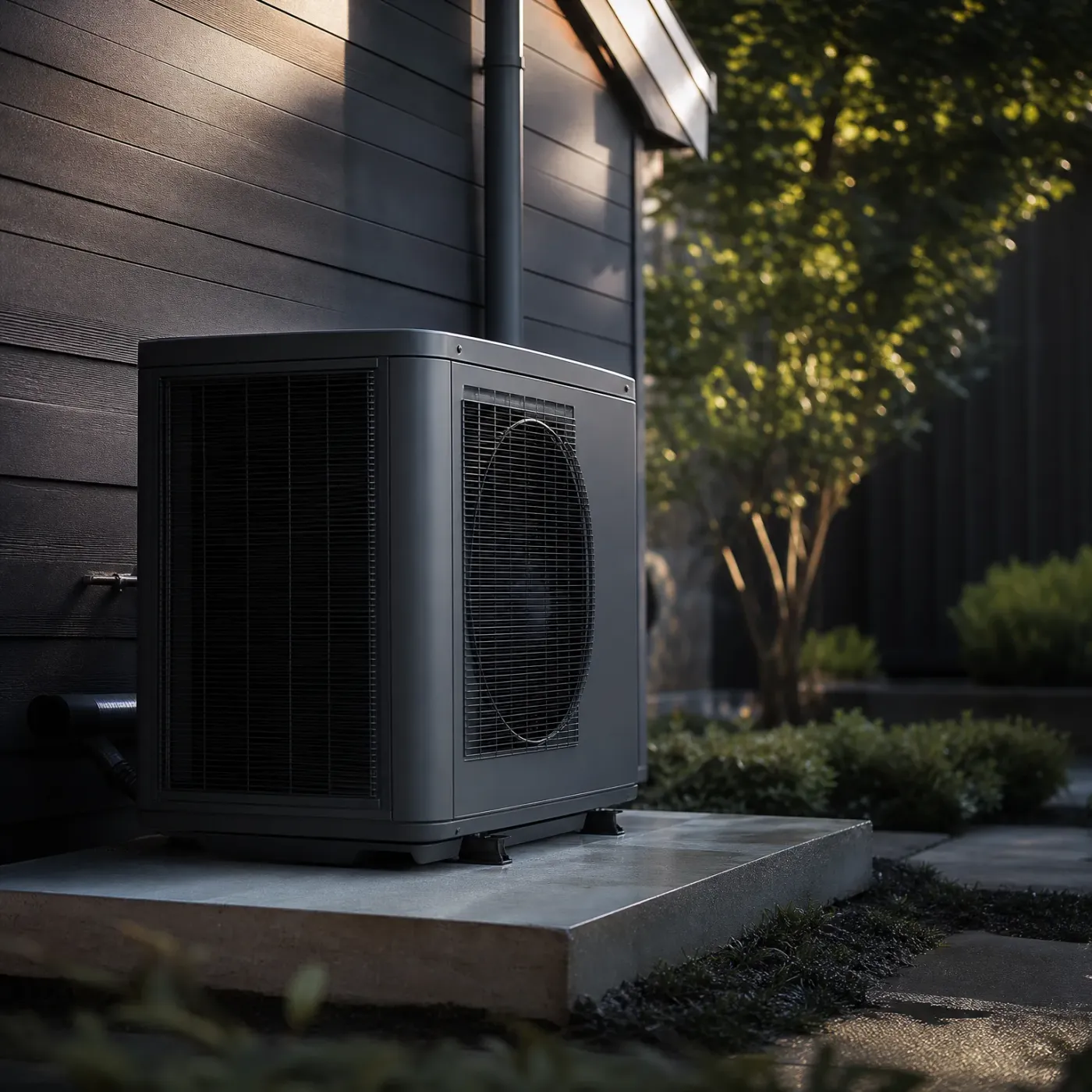




A gray outdoor condenser/heat pump unit with a side fan grille sits on a concrete pad beside a dark horizontal wood-sided house, with shrubs and a small tree nearby.

Finding a pro stops being your job

Why your heat pump won't turn on in South Carolina

A heat pump that won't start can mean a tripped breaker, a bad thermostat signal, or a compressor that's locked up, and it heats most homes in South Carolina so there's no good time for it to quit. This page walks through what's likely going on. Send the form and skip the part where you're calling around and explaining the problem over and over.

Let a pro reach out

A heat pump that won't turn on usually comes down to power or a signal that isn't reaching it. The breaker could be tripped, or the disconnect box next to the outdoor unit could be switched off. If the thermostat screen is dark or unresponsive, the system has no way to tell the unit to start. Sometimes the problem is inside the unit itself: a capacitor that's failed, or a compressor that's locked up and won't engage. Since most homes in South Carolina heat with electricity, a heat pump that stays dead isn't a small inconvenience. You're not left guessing why it happens, but you do need someone to check the breaker, the thermostat wiring, and the unit itself to find out which one it is. That's diagnosis work, not something to keep testing on your own with the power on and off.

A smiling man in a blue denim shirt over a white tee sits at a light stone kitchen counter with a grey mug and a bowl of oranges and bananas, with pendant lights and shelving behind him.
A smiling bearded man in a grey long-sleeved shirt sits at a kitchen counter with a dark mug, with a dining table, pendant light and glass doors onto greenery behind him.
A bearded man in a dark green knit sweater smiles and looks off to the side while standing at a kitchen counter with a white mug of coffee, with open shelving, a potted tree, and a dining table near large windows behind him.
A man with dark curly hair in a dark green sweater stands smiling and looking to the side in a kitchen with white cabinets, a potted plant, a stone countertop with a ceramic mug, and a dining area with framed art in the background.

Check the outdoor unit first

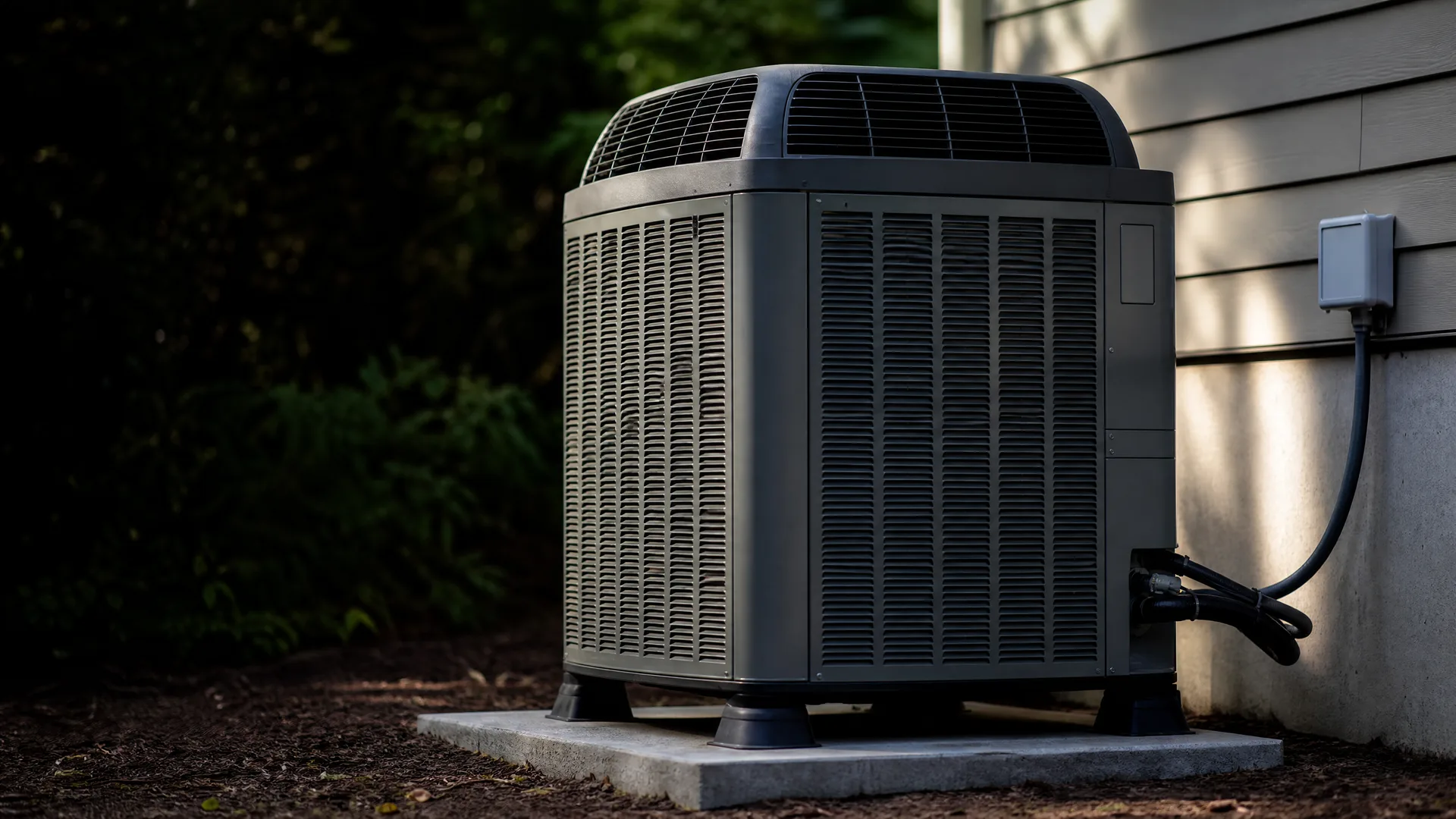
Go outside and look at the condenser. If the fan isn't spinning and you don't hear any hum at all, the unit likely isn't getting power. That points back to the breaker or the disconnect box mounted on the wall next to it. If you hear a faint hum but the fan doesn't move, that's different, and it usually means a part inside the unit failed rather than a power problem. Either way, what you see and hear outside narrows down what's wrong before anyone shows up to look at it.


Why the breaker trips again

A breaker that trips once can be a fluke. One that trips every time you reset it is telling you something is pulling too much current, often the compressor or the outdoor fan motor straining to start. Resetting it again and again doesn't fix that, and running it that way risks more damage to the parts drawing the extra load. In South Carolina, where electric heat pumps run through winter and the muggy summers both, a breaker that won't hold is worth taking seriously instead of resetting and hoping.

An outdoor air conditioner condenser unit on a concrete pad beside a house with horizontal siding above a concrete block foundation, with insulated refrigerant lines and a vertical white pipe on the wall.
Before you get your heat pump repair
A gray outdoor condenser unit sits on a concrete pad against a house wall with horizontal siding above a stone veneer base, with an electrical disconnect box and conduit on the wall and a leafy shrub in mulch to the left.
After you get your heat pump repair

A heat pump has more going on inside it than a furnace does, and some of that works against it starting when you expect it to. The reversing valve is what lets the same unit heat your house in January and cool it in July. When that valve sticks, the system can refuse to run rather than start in the wrong mode. Outdoor sensors matter too. The compressor waits for a reading in a certain range before it engages, and a bad sensor can hold it back even when the air outside is nowhere near extreme. Short power blips cause their own delay. Most systems build in a wait of several minutes before the compressor is allowed to restart, so a flicker from the power company can leave your unit sitting quiet for a while afterward. Ice on the outdoor coil forces a defrost cycle that has to finish before anything else starts. And if the thermostat is dark, the problem might be a failed 24-volt transformer rather than the breaker. Electric heat strips can hide all of this, since the house keeps getting warm air even while the heat pump itself has stopped working.

Why It Looks Dead but Isn't

  • A heat pump has a reversing valve that switches it between heating and cooling, and a stuck valve can keep the system from starting in either mode.
  • The outdoor unit needs to sense a certain outdoor temperature range before the compressor will engage, so extreme readings on a bad sensor can block startup.
  • Many systems have a lockout that waits several minutes after a power interruption before letting the compressor restart, which can look like the unit refusing to run.
  • If the outdoor coil is iced over, a defrost cycle has to finish before the compressor and fan will start again.
  • A low-voltage transformer sends 24 volts to the thermostat and controls, and if that transformer fails the whole system stays silent even with the breaker on.
  • Auxiliary electric heat strips can mask a failed compressor, since the house still gets warm air while the heat pump itself never actually turns on.
A bearded man in a navy T-shirt sits on a light-colored couch indoors, smiling while looking down at a laptop screen in the foreground, with a framed picture and a potted plant blurred behind him.
A bearded man in a plaid flannel shirt stands indoors looking out a window at snow-covered conifers, with a ceramic mug on the wooden sill and wooden cabinets behind him.

Let someone else find the pro

Fill out one short form instead of calling around.

You only hire the pro if you want to.

A gray outdoor condenser unit on a concrete pad beside a house with stacked stone and horizontal siding, surrounded by gray gravel and a plain light wall.

No heat in your house

Most homes in South Carolina run on electric heat, so when the heat pump won't start, there's no backup warming the place. You'll feel it fast, especially overnight when the temperature keeps dropping and nothing kicks on to stop it. A space heater in one room doesn't fix a system that's down. The longer it sits off, the more the whole house settles into the cold, not just one hallway or bedroom.

A dark gray outdoor heat pump unit sits on a concrete pad beside a white stucco wall and lap-sided house corner, with mulch and a small shrub in the foreground.

Finding help on your own

If you deal with this yourself, you're calling contractors one at a time, explaining the same symptoms over and over, waiting to hear back, then doing it again when the first one can't come soon or the price seems off. That's hours gone before anyone even looks at your unit. Send the form on this page and that search is done. A contractor who works on heat pumps in your area gets your information, and you stop being the one chasing it down.

Power costs 15.12 cents per kilowatt-hour statewide

At 15.12 cents per kilowatt-hour, running your heat pump isn't the issue here, getting it to run at all is. A locked-up compressor or a bad signal from the thermostat won't show up on your bill as high usage. It shows up as a cold house and a system doing nothing.

EIA-861 2025 statewide residential average

  1. Thermostat calls for heat and sends a signal to the control board.

  2. Control board checks safety switches before waking the system.

  3. Contactor pulls in and sends power to the outdoor unit.

  4. Compressor and fan start, and the reversing valve sets the mode.

What are you noticing right now in your house

The thermostat is set to heat but nothing changes. You walk past a vent and feel nothing coming out of it. Outside, the condenser sits quiet, no fan turning, no hum. Inside the house, the air is starting to feel the way it does when a window's been left open. If this drags on, it's not just comfort. Pipes in an exterior wall can get cold enough to be a problem when a house has no other way to heat, and anyone sensitive to cold in the house feels it before you do. None of that means damage has started. It means the house has one heat source and it isn't running.

A gray outdoor condenser unit sits on a concrete pad beside a house with horizontal lap siding, with a wall-mounted disconnect box and refrigerant lines, mulched beds and a shrub nearby, and a concrete walkway in the foreground.
The condenser hums along and the fan turns, pulling air through clean mulch beds with no debris pressed against the coil.
An outdoor air conditioning condenser unit with dusty coils sits on a concrete pad against light horizontal siding, with an electrical disconnect box and refrigerant lines on the wall and a shrub and mulch at left.
Grime cakes the cabinet and the lines run bare into the wall, the kind of neglect that wears on a compressor until it quits.

Call now or wait it out

Call a contractor now

  • A licensed tech can check the breaker, the disconnect box, and the control board in one visit instead of you guessing at each part.
  • You skip the step of searching for who's available and explaining the problem more than once.
  • If the compressor is locked up, that's not a part you can test or reset yourself.
  • A stuck reversing valve or a bad sensor reading needs a meter and training to pin down.
  • Once the form is sent, finding someone to come look at it stops being your problem.

Wait and watch it

  • If the breaker tripped on its own, it might trip again, and you won't know why until someone traces the cause.
  • A thermostat screen that's dark could mean dead batteries, which costs you nothing to check first.
  • The longer a locked compressor sits without diagnosis, the longer you're without heat with no backup source warming the house.
  • Waiting means more calls to make and more quotes to compare once you do decide to act.
  • If the outdoor unit is dead quiet with no hum at all, there's little a homeowner can safely do beyond flipping the breaker back once.
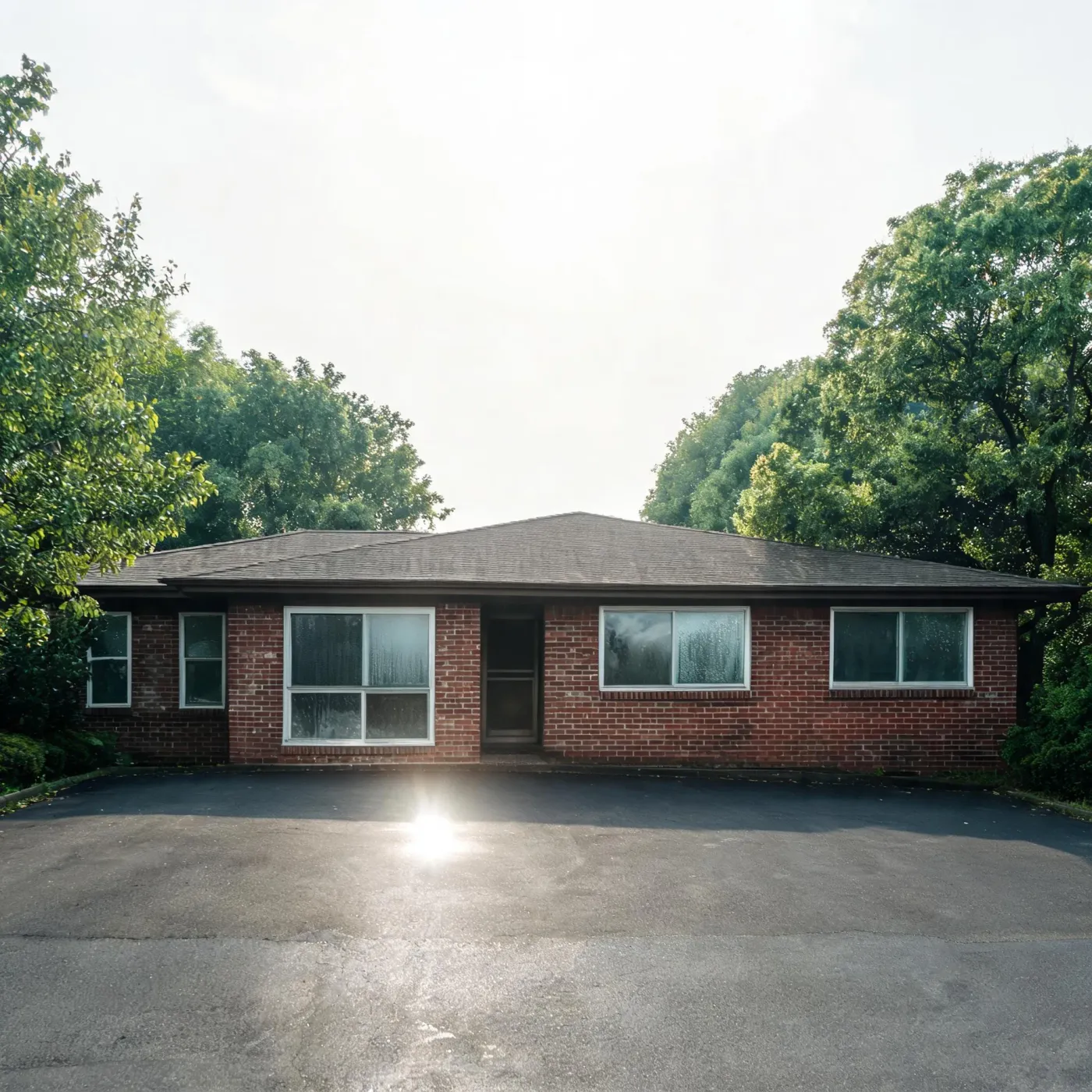
A single-story red brick building with a shingled hip roof, large windows and a recessed central entry, fronted by a wide empty asphalt parking area with sun glare, surrounded by green deciduous trees.

A summer dew point averaging 69°F across South Carolina means the air carries a lot of moisture on top of the heat, the kind of muggy that sticks to you the second you step outside. Source: NOAA climate averages. Your heat pump has to pull that moisture out of the air it handles, on top of cooling it, and that's steady work for the compressor and the coil all summer. When the unit won't start at all, it's not because the heat caught up on a hard day. Something stopped it cold, whether that's a tripped breaker, a bad signal, or a compressor that locked up. The humidity explains why the system works hard. It doesn't explain why it quit.

NASA POWER T2MDEW county cells weighted by homes

A closed silver laptop and a glazed ceramic mug on a wooden table, with a blurred kitchen counter, potted plant, cutting board and window in the background.

A heat pump that won't start is a power or signal problem, not a mystery

Most of the time it's one of a few things: a tripped breaker, a disconnect switched off, a bad signal from the thermostat, or a compressor that's locked up and won't engage. Checking the outdoor unit and the breaker tells you which kind of problem you're dealing with. Sorting out which part failed and fixing it is a job for someone who works on these every day.

You don't have to spend your evening searching for a contractor, calling a few, and explaining the same thing to each one before you get a straight answer. Send the form once and that search is off your plate. You'll still need the repair done, but you won't be the one tracking down who can do it.

A dark ceramic mug on a round wooden table beside a light grey sofa with a woven cushion and knit throw, with a window, potted plant, floor lamp and wooden cabinet blurred in the background.
An outdoor air conditioning or heat pump condenser unit on a concrete pad beside a house with horizontal siding, with a wall-mounted disconnect box and refrigerant lines, and dark shrubs to the left.

One request and it's handed off

Step 1 of 3: Equipment