Tell us about the job
Takes about a minute. No obligation.
A contractor quoting a heat pump in Cherokee County has to solve a sizing problem before anything else. Homes in Cherokee County, SC run heat about seven months a year, from October through April. As the outdoor temperature falls, a heat pump's capacity falls with it, which means a unit that looks adequate on paper can fall short on the coldest days when the load is heaviest. An undersized system compensates by running longer and leaning harder on its compressor and backup resistance elements. The installer has to establish the actual heating load, confirm where supplemental heat cuts in, and verify that the refrigerant circuit and the electric service can carry the demand the winter months will place on them.
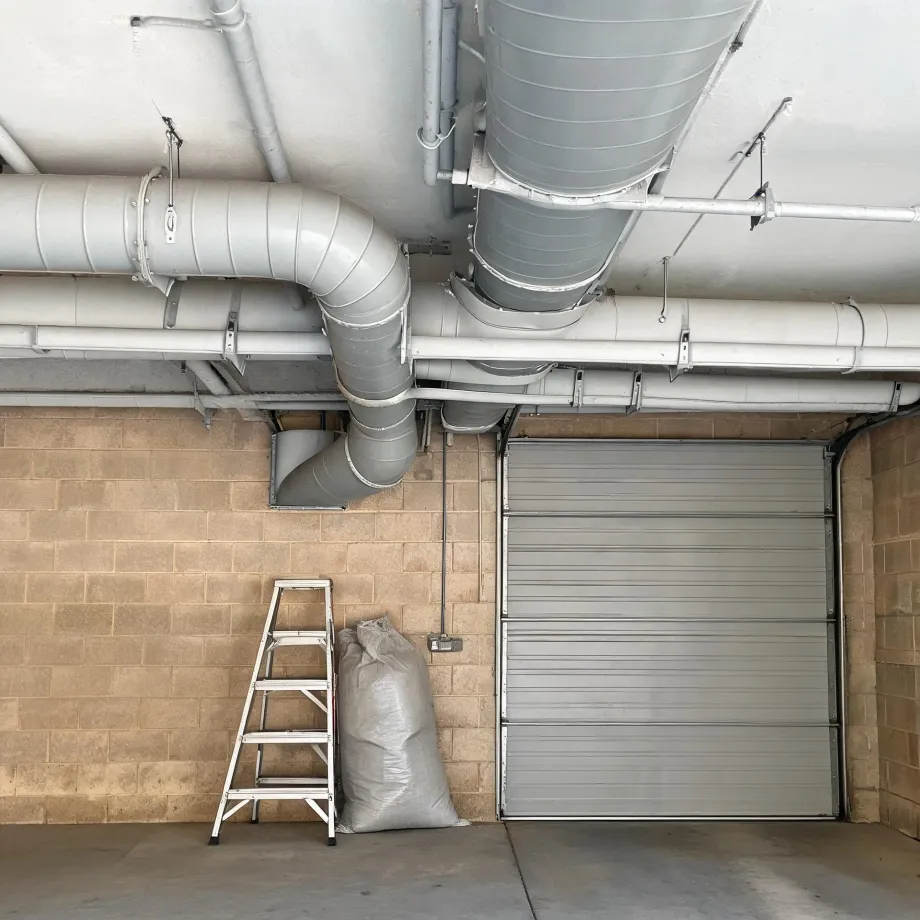
Ductwork laid down for a previous generation of central equipment runs through a large share of Cherokee County homes, and whether it moves air at the volumes a heat pump requires is the question that shapes what an installation actually costs. Half the homes in Cherokee County, South Carolina were built in 1984 or earlier (2020-2024 ACS 5-year). A contractor sizing a new heat pump against that stock has to assess the existing duct layout before the equipment selection means anything, because undersized or poorly sealed runs will undercut a correctly sized unit. The electrical panel gets the same look: a heat pump draws differently than what many of these houses were originally wired to carry.
What Gets Installed With a New Heat Pump
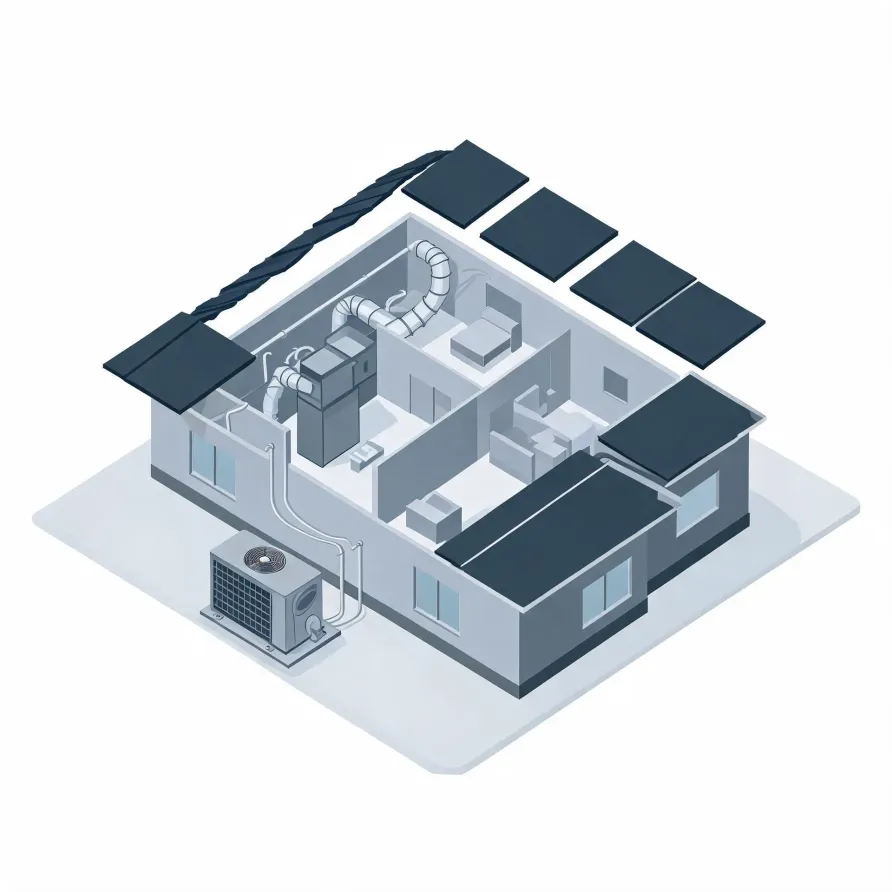
The outdoor unit is the piece a homeowner sees first, set on a pad beside the house, and it holds the compressor and the outdoor coil that do the core work. Inside, an air handler mounts in a utility space, attic, or closet and pushes conditioned air through the home. Together these two units are what a Heat Pump installation puts in place.
A refrigerant line set runs between the outdoor unit and the air handler, connecting the two and carrying the refrigerant that makes the system work. A thermostat goes on an interior wall and gives the homeowner control over the whole system. Some installations also include a supplemental electric heat strip inside the air handler for the coldest days.
The drawing shows a typical Heat Pump layout, and a licensed contractor determines exactly what applies to this house.
Get matched in Cherokee CountyCherokee County, SC, by the numbers
80 severe weather events were recorded in Cherokee County, South Carolina between 2015 and 2024.
NOAA National Centers for Environmental Information, Storm Events Database, bulk CSV export, events 2015-01-01 through 2024-12-31.Half the homes in Cherokee County, South Carolina were built in 1984 or earlier (2020-2024 ACS 5-year).
U.S. Census Bureau, 2020-2024 American Community Survey 5-Year EstimatesCherokee County, South Carolina holds 25,150 housing units (2020-2024 ACS 5-year).
U.S. Census Bureau, 2020-2024 American Community Survey 5-Year EstimatesOwners occupy 73.8% of the occupied homes in Cherokee County, South Carolina (2020-2024 ACS 5-year).
U.S. Census Bureau, 2020-2024 American Community Survey 5-Year EstimatesCodes & Standards Governing Heat Pump Installation in Cherokee County, South Carolina1 sourced rules and standards
Licensing Rules for Cherokee County, South Carolina
South Carolina requires a mechanical contractor license for contracting work whose total cost of construction is greater than ten thousand dollars.
Severe Weather Events in Cherokee County
Weather here puts real load on heating and cooling equipment, and that load shapes what a heat pump needs to handle over its working life. Sizing and installing a system without accounting for local conditions is how equipment ends up underbuilt for the place it serves.
80 severe weather events, 2015–2024. Source: NOAA National Centers for Environmental Information, Storm Events Database.