Tell us about the job
Takes about a minute. No obligation.
Sizing a heat pump for Union County means working out what the unit can actually deliver when outdoor temperatures bottom out, not just what its nameplate says. Homes in Union County, SC run heat about five months a year, from November through March. A heat pump loses heating capacity as the air outside cools, so the contractor has to know how cold it gets here and how long those temperatures hold before they can settle on a unit size and whether backup heat is needed. Get that calculation wrong and the shortfall shows up on the hardest January days, when the system runs continuously and still cannot bring the house up to temperature. A load calculation done for this county's winter is what keeps that from happening.
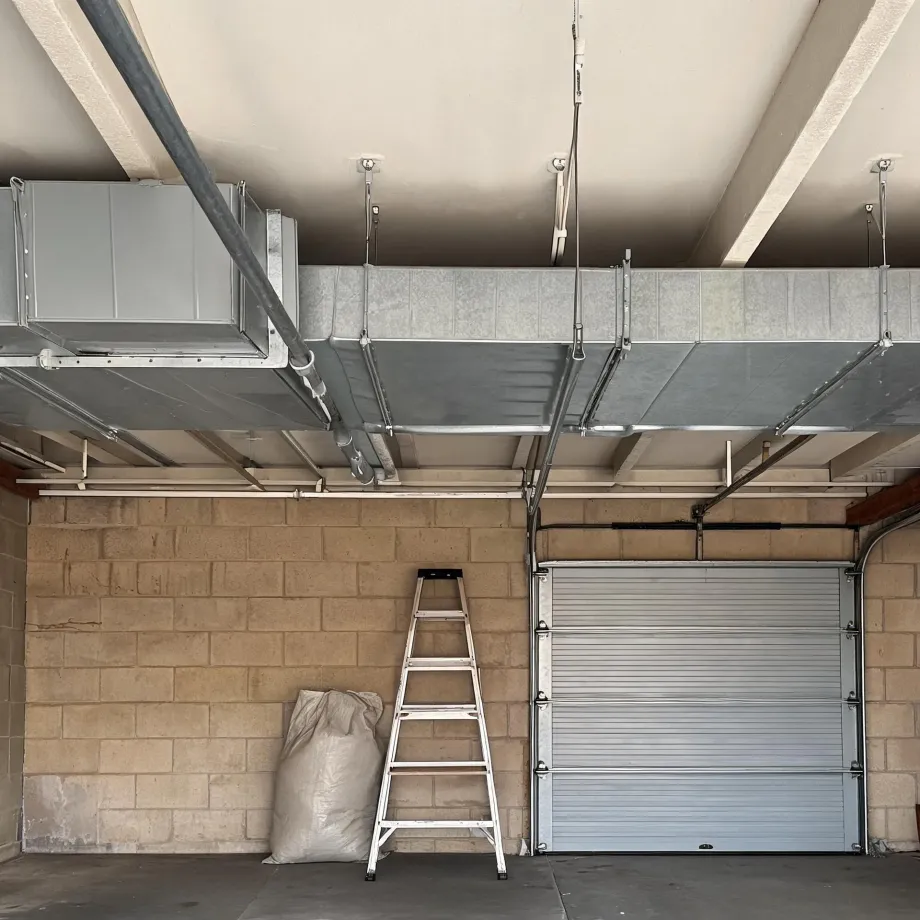
Ductwork sized and routed for a different era of equipment does not automatically carry a heat pump's airflow demands, and that gap is where most of the real work on an installation lives. Half the homes in Union County, South Carolina were built in 1972 or earlier (2020-2024 ACS 5-year). A house that old was almost certainly built around heating and cooling technology that has since been replaced at least once, which means the ducts running through it were laid out for something other than what a contractor is now being asked to connect. Before a new unit goes in, a contractor has to determine whether the existing duct runs, returns, and register placements will move air the way a heat pump needs. The electrical service is a separate question entirely. Both have to be answered before the cost of the box itself tells you much.
What Gets Installed With a New Heat Pump
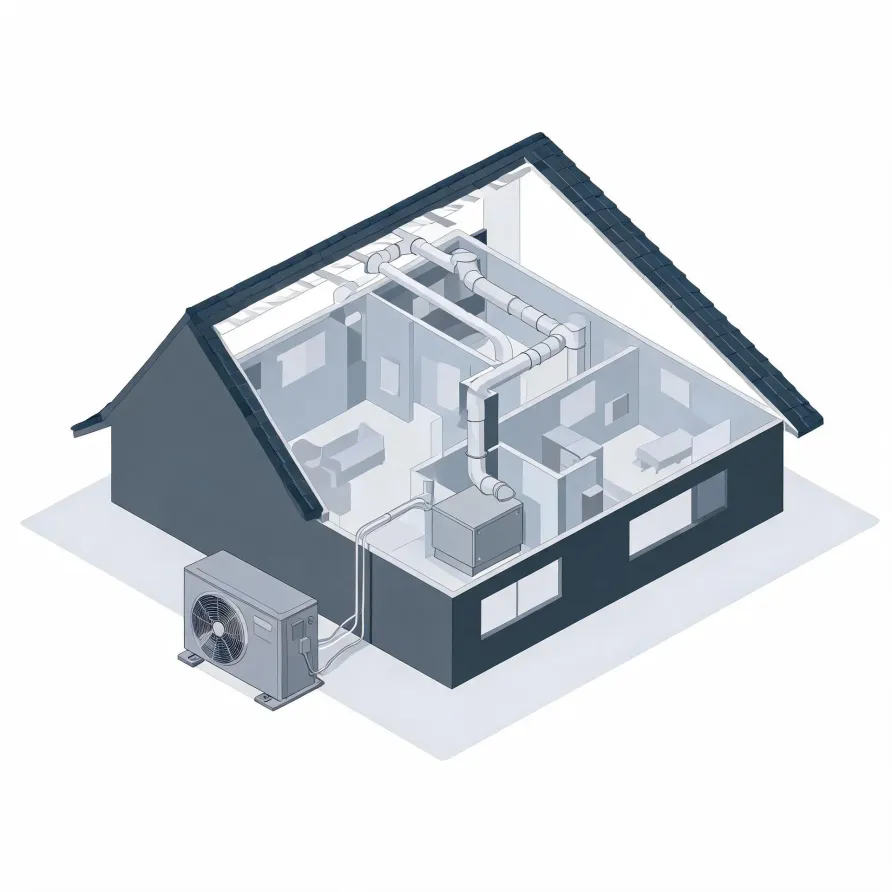
The outdoor unit sits on a concrete pad or wall brackets outside the house and holds the compressor and one set of coils. Inside, an air handler mounts in a utility closet, attic, or basement and pushes conditioned air through the home. Together, these two cabinets are the core of what a contractor places and connects.
A copper refrigerant line set runs between the outdoor unit and the air handler, carrying the working fluid back and forth through insulated tubing. A thermostat goes on an interior wall where it can read the living space accurately, and a condensate drain line runs from the air handler to a suitable drain point.
The drawing shows a typical layout, and a licensed contractor determines what fits this house specifically.
Get matched in Union CountyUnion County, SC, by the numbers
73 severe weather events were recorded in Union County, South Carolina between 2015 and 2024.
NOAA National Centers for Environmental Information, Storm Events Database, bulk CSV export, events 2015-01-01 through 2024-12-31.Half the homes in Union County, South Carolina were built in 1972 or earlier (2020-2024 ACS 5-year).
U.S. Census Bureau, 2020-2024 American Community Survey 5-Year EstimatesUnion County, South Carolina holds 13,527 housing units (2020-2024 ACS 5-year).
U.S. Census Bureau, 2020-2024 American Community Survey 5-Year EstimatesOwners occupy 71.3% of the occupied homes in Union County, South Carolina (2020-2024 ACS 5-year).
U.S. Census Bureau, 2020-2024 American Community Survey 5-Year EstimatesHeat Pump Installation Rules and Codes for Union County, South Carolina1 sourced standards and codes
What Union County, South Carolina Requires for This Work
South Carolina requires a mechanical contractor license for contracting work whose total cost of construction is greater than ten thousand dollars.
Severe Weather Events in Union County
Weather puts a load on heating and cooling equipment, and that load is local. A heat pump sized and installed for this county's conditions handles the work that actually shows up.
73 severe weather events, 2015–2024. Source: NOAA National Centers for Environmental Information, Storm Events Database.