Tell us about the job
Takes about a minute. No obligation.
A heat pump's hardest work happens when outdoor temperatures fall, and that is where an undersized system runs out of capacity before the house is warm. Homes in Georgetown County, SC run heat about five months a year, from November through March. Across those months the compressor is cycling against cold air, and as temperatures drop, a heat pump delivers less heat precisely when the house demands more. A contractor sizing a system here has to account for that gap and determine whether supplemental heat is needed and at what outdoor temperature it must kick in. Get that calculation wrong and the back-up strip heat carries the load the heat pump should have handled, driving up the electric bill every cold month.
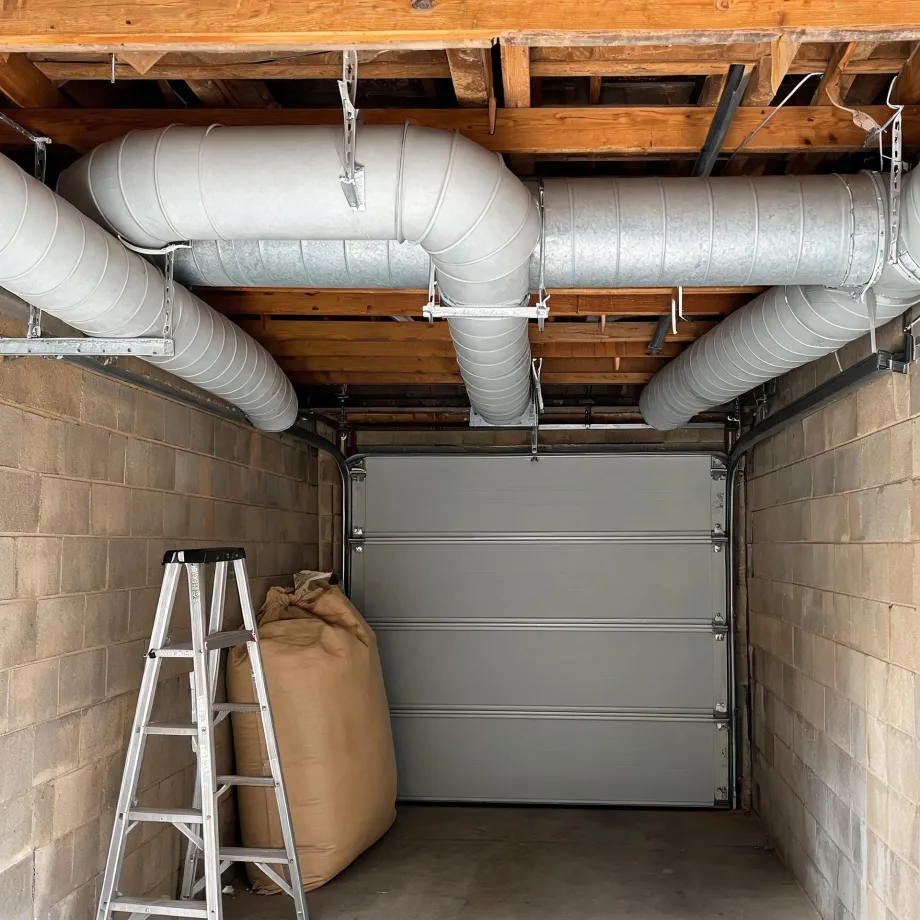
Existing ductwork is what sets the price and the scope of a heat pump installation here more than any other single factor. Half the homes in Georgetown County, South Carolina were built in 1993 or earlier (2020-2024 ACS 5-year). Houses built by then were ducted around the equipment available at the time, and the airflow a modern heat pump demands is a different number than what those runs were sized to carry. A contractor will measure and pressure-test before anything is quoted, because undersized or leaky duct runs require remediation that changes the job entirely. The electrical service in houses of that vintage also gets checked: heat pump loads differ from what many of those panels were originally wired for.
What to Know About a Heat Pump Before Yours Goes In
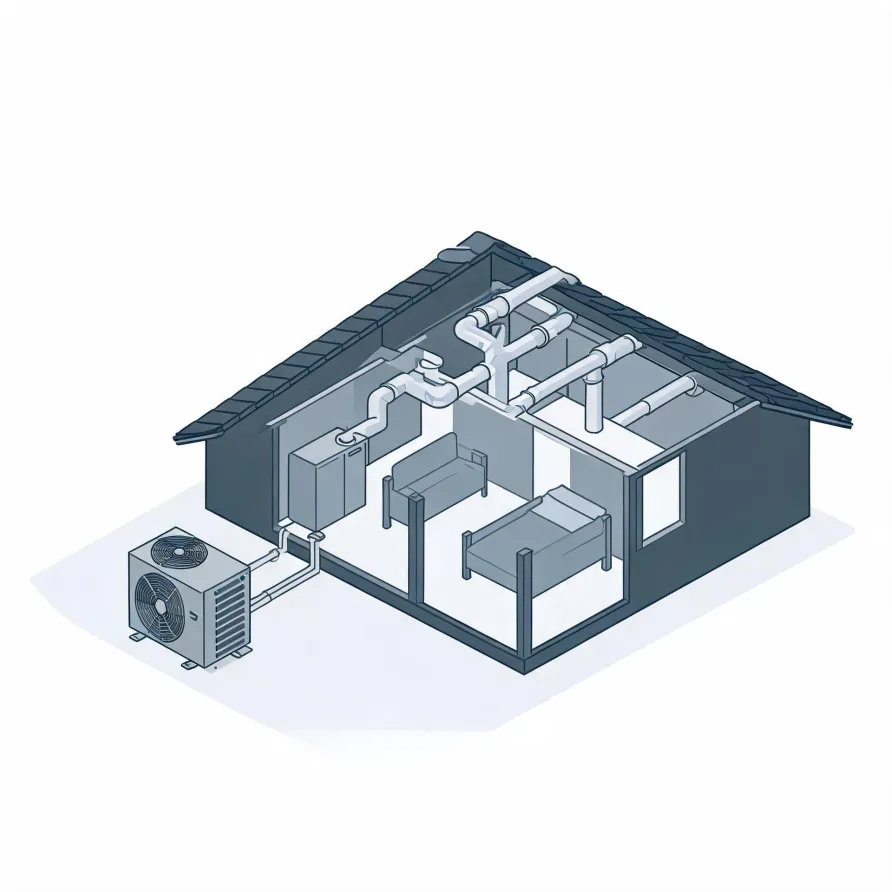
The outdoor unit is the piece most homeowners recognize first. It sits on a pad beside the house and holds the compressor and the outdoor coil, which together do the heavy work of moving heat between the refrigerant and the outside air. The indoor air handler mounts in a utility closet, attic, or mechanical room and pushes conditioned air through the home.
A refrigerant line set runs between the two units, carrying refrigerant back and forth through insulated copper tubing. The air handler also houses the expansion valve and the coil that handles the indoor side of the exchange, and a condensate drain line runs from it to carry off any moisture the system pulls from the air.
The drawing shows a typical layout, and a licensed contractor determines what applies to your specific house.
Get matched in Georgetown CountyGeorgetown County, by the numbers
78 severe weather events were recorded in Georgetown County, South Carolina between 2015 and 2024.
NOAA National Centers for Environmental Information, Storm Events Database, bulk CSV export, events 2015-01-01 through 2024-12-31.Half the homes in Georgetown County, South Carolina were built in 1993 or earlier (2020-2024 ACS 5-year).
U.S. Census Bureau, 2020-2024 American Community Survey 5-Year EstimatesGeorgetown County, South Carolina holds 37,173 housing units (2020-2024 ACS 5-year).
U.S. Census Bureau, 2020-2024 American Community Survey 5-Year EstimatesOwners occupy 84.0% of the occupied homes in Georgetown County, South Carolina (2020-2024 ACS 5-year).
U.S. Census Bureau, 2020-2024 American Community Survey 5-Year EstimatesRules & Standards Governing Heat Pump Installation in Georgetown County, South Carolina1 sourced rules and standards
Licensing Rules for Georgetown County, South Carolina
South Carolina requires a mechanical contractor license for contracting work whose total cost of construction is greater than ten thousand dollars.
Severe Weather Events in Georgetown County
Weather puts direct load on heating and cooling equipment, and that load varies by location. A heat pump sized and installed for what Georgetown County actually sees will run more reliably than one spec'd to a generic regional standard.
78 severe weather events, 2015–2024. Source: NOAA National Centers for Environmental Information, Storm Events Database.