Tell us about the job
Takes about a minute. No obligation.
For a heat pump installation in Charleston County, the contractor's first job is a load calculation that accounts for where the system runs hardest. Homes in Charleston County, SC run heat about five months a year, from November through March. The heating side is where capacity gets tight: outdoor temperatures drop, and a heat pump's output falls with them, which is exactly when the equipment is being asked to do the most. A unit sized without accounting for those coldest weeks leaves the backup heat running more than it should, and backup heat costs more to run than the heat pump itself. Commissioning done right verifies that the system can hold temperature without leaning on resistance heat every time the mercury falls.
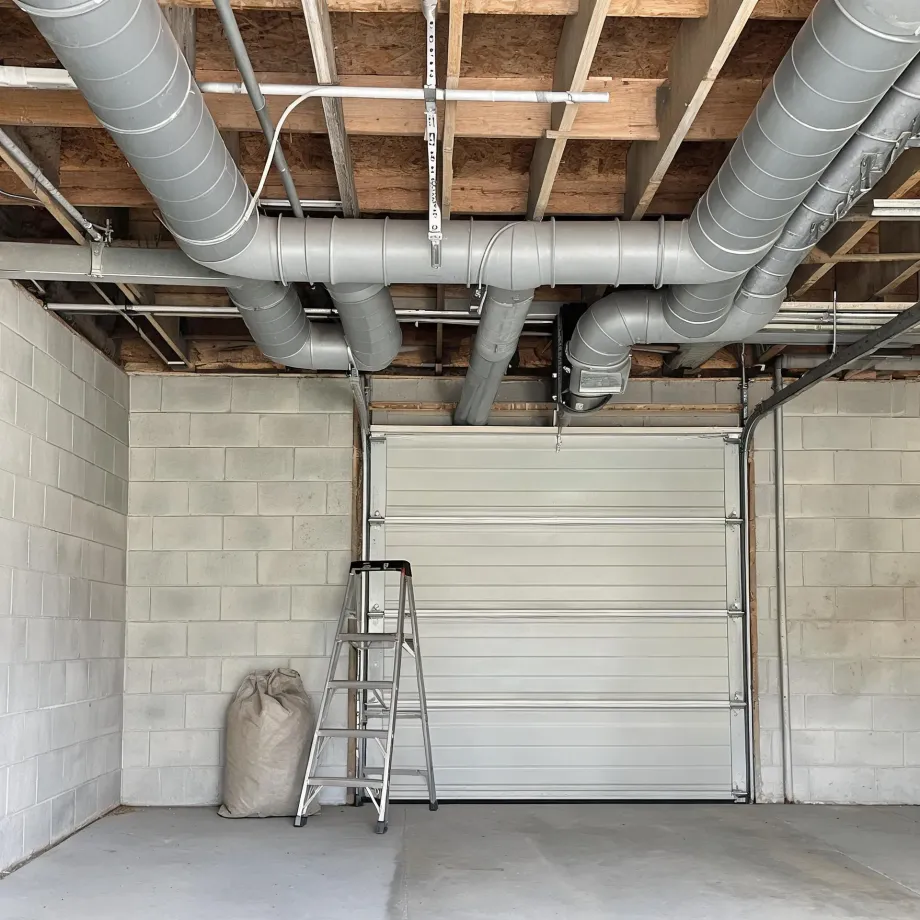
Existing ductwork is what shapes a heat pump installation here more than anything else a contractor prices or plans. Half the homes in Charleston County, South Carolina were built in 1991 or earlier (2020-2024 ACS 5-year). Houses built by that point were ducted for equipment with different airflow demands than a heat pump places on the system, and what sits behind the walls reflects that. A contractor who opens the ductwork in a typical Charleston County home is looking at whether it moves the right volume of air, not just whether it is intact. Electrical service runs second: the panel has to support the load a heat pump draws, and in stock of this age that is a question worth opening before anything else is quoted.
What Gets Installed With a New Heat Pump
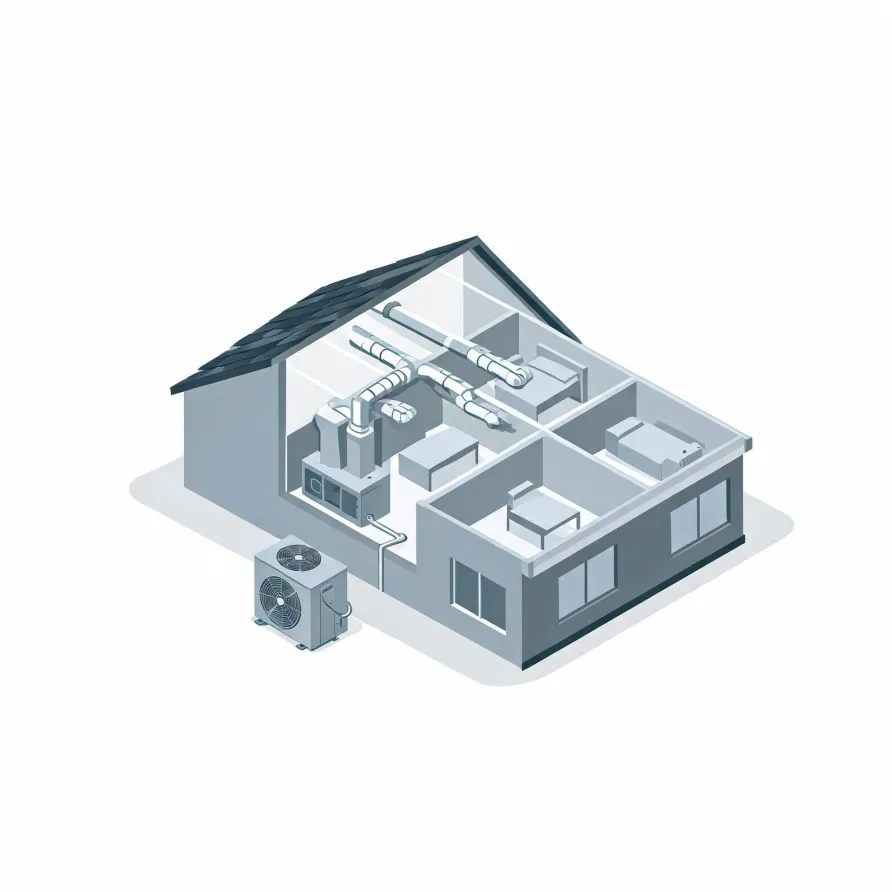
The outdoor unit is the piece a homeowner sees first, set on a pad beside the house, and it holds the compressor and the outdoor coil that do the bulk of the work. Inside, the air handler mounts in a utility space, attic, or closet and pushes conditioned air through the home. Together these two units are the core of what a contractor places during an installation.
A refrigerant line set runs between the outdoor unit and the air handler, carrying the refrigerant that links the two sides of the system. The thermostat goes on an interior wall and gives the homeowner control over the whole system. A condensate drain line also runs from the air handler to carry away any moisture the indoor coil pulls from the air.
The drawing beside this text shows the general layout of these components, and a licensed contractor determines exactly how each one is positioned and connected in your specific home.
Get matched in Charleston CountyCharleston County, by the numbers
436 severe weather events were recorded in Charleston County, South Carolina between 2015 and 2024.
NOAA National Centers for Environmental Information, Storm Events Database, bulk CSV export, events 2015-01-01 through 2024-12-31.Half the homes in Charleston County, South Carolina were built in 1991 or earlier (2020-2024 ACS 5-year).
U.S. Census Bureau, 2020-2024 American Community Survey 5-Year EstimatesCharleston County, South Carolina holds 209,803 housing units (2020-2024 ACS 5-year).
U.S. Census Bureau, 2020-2024 American Community Survey 5-Year EstimatesOwners occupy 63.9% of the occupied homes in Charleston County, South Carolina (2020-2024 ACS 5-year).
U.S. Census Bureau, 2020-2024 American Community Survey 5-Year EstimatesRules and Standards Behind Heat Pump Installation in Charleston County, South Carolina1 sourced rules and standards
Licensing Rules for HVAC Work in Charleston County, South Carolina
South Carolina requires a mechanical contractor license for contracting work whose total cost of construction is greater than ten thousand dollars.
Severe Weather Events in Charleston County
Local weather puts real demands on heating and cooling equipment, and those demands shape what a heat pump needs to handle over its life. Sizing and installing equipment without accounting for what the climate actually does here is how systems end up underbuilt.
436 severe weather events, 2015–2024. Source: NOAA National Centers for Environmental Information, Storm Events Database.