Tell us about the job
Takes about a minute. No obligation.
Sizing a heat pump for this county means solving for January before anything else. Homes in Clarendon County, SC run heat about five months a year, from November through March. As outdoor temperatures fall toward freezing, a heat pump's capacity drops with them, and a unit that covers the load in October starts leaning on its backup heat strips by December. A contractor who skips a room-by-room load calculation and pulls from a generic table will almost certainly land on a system that works in the mild shoulder months and struggles when it matters. The backup strips carry what the refrigerant circuit cannot, and components sized for occasional use wear differently when they cycle hard through the coldest stretch of the year.
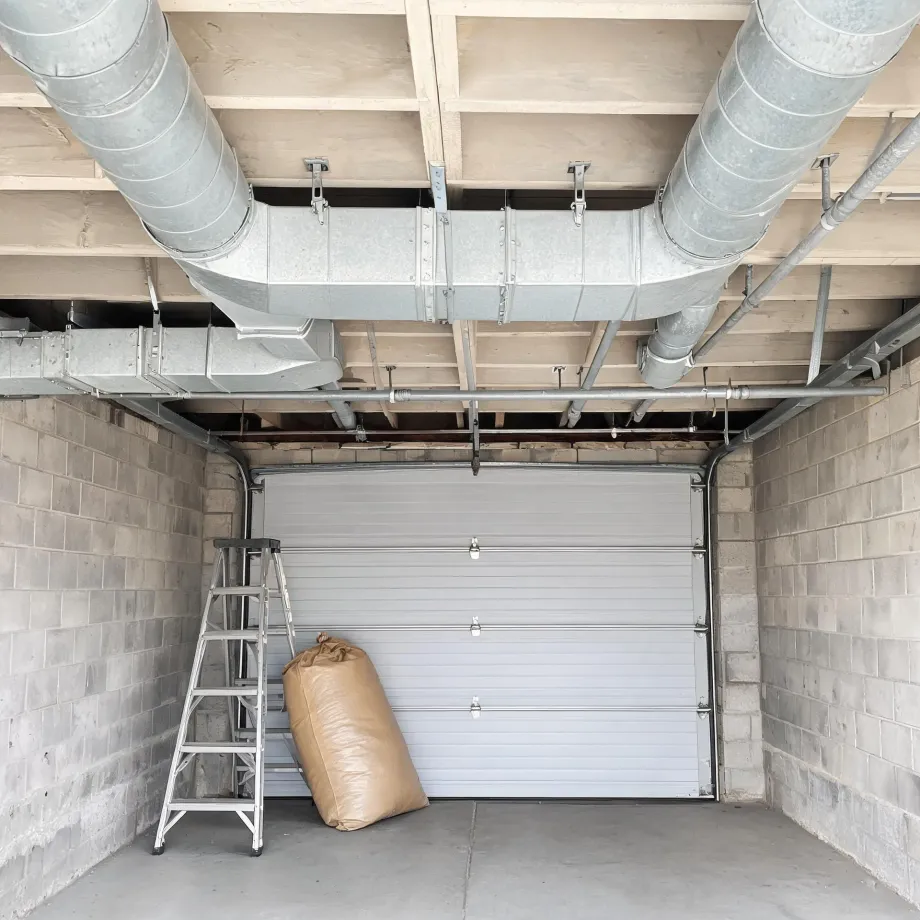
Ductwork laid out for a different system is the thing a contractor has to open and trace before a heat pump quote means anything here. Half the homes in Clarendon County, South Carolina were built in 1990 or earlier (2020-2024 ACS 5-year). That generation of forced-air work was sized around equipment with different airflow demands, and a heat pump's delivery requirements can expose restrictions, trunk layouts, and return configurations that looked fine until something new had to run through them. The electrical is a separate question, but the duct system is where the installation either works or gets complicated.
What Gets Installed With a New Heat Pump
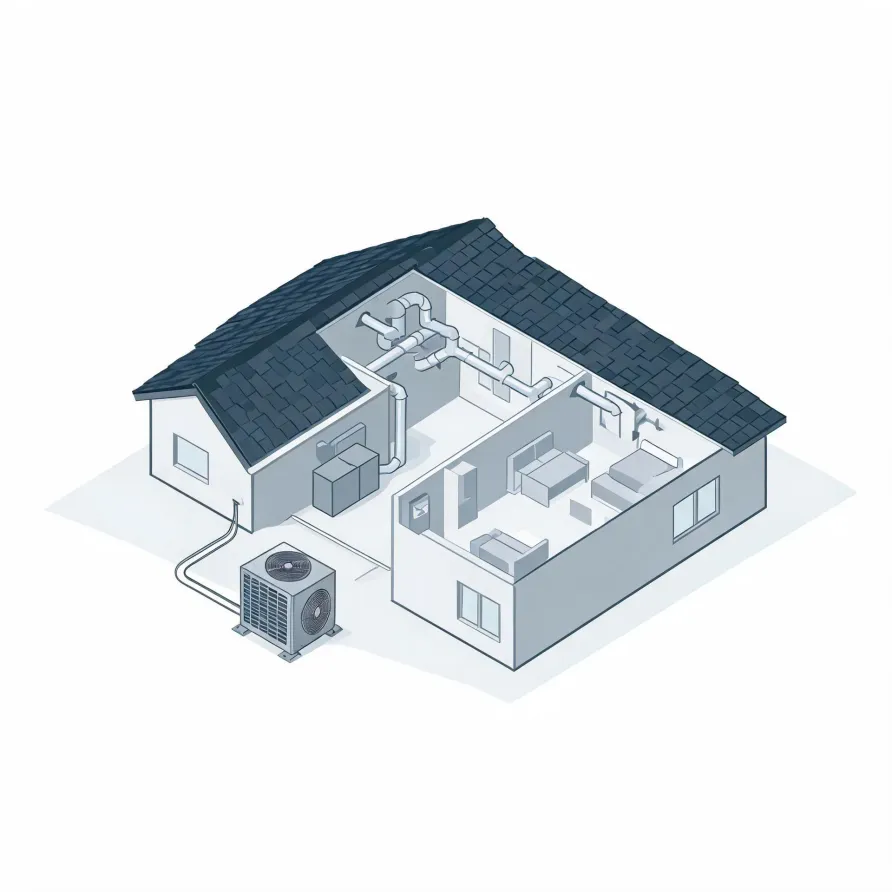
The outdoor unit sits on a pad beside the house and holds the compressor and the condenser coil, which are the parts that do the heaviest work of moving heat between inside and outside. The indoor air handler mounts in a utility closet, attic, or basement and contains the blower and the evaporator coil that conditions the air before it moves through the house.
A refrigerant line set runs between the two units, carrying the refrigerant back and forth, and a condensate drain line carries moisture away from the air handler. A thermostat mounts on an interior wall and is what the homeowner uses to tell the system what to do.
The drawing shows a representative layout, and a licensed contractor determines exactly which components and configurations apply to your home.
Get matched in Clarendon CountyClarendon County, by the numbers
121 severe weather events were recorded in Clarendon County, South Carolina between 2015 and 2024.
NOAA National Centers for Environmental Information, Storm Events Database, bulk CSV export, events 2015-01-01 through 2024-12-31.Half the homes in Clarendon County, South Carolina were built in 1990 or earlier (2020-2024 ACS 5-year).
U.S. Census Bureau, 2020-2024 American Community Survey 5-Year EstimatesClarendon County, South Carolina holds 16,089 housing units (2020-2024 ACS 5-year).
U.S. Census Bureau, 2020-2024 American Community Survey 5-Year EstimatesOwners occupy 72.9% of the occupied homes in Clarendon County, South Carolina (2020-2024 ACS 5-year).
U.S. Census Bureau, 2020-2024 American Community Survey 5-Year EstimatesCodes & Standards Governing Heat Pump Installation in Clarendon County, South Carolina1 sourced rules & standards
Licensing and Legal Requirements in Clarendon County, South Carolina
South Carolina requires a mechanical contractor license for contracting work whose total cost of construction is greater than ten thousand dollars.
Severe Weather Events in Clarendon County
Clarendon County's climate puts real demands on heating and cooling equipment over time. How hard a heat pump works, and how long it holds up, is shaped by local conditions, which is why weather history belongs on a page about installation.
121 severe weather events, 2015–2024. Source: NOAA National Centers for Environmental Information, Storm Events Database.