Tell us about the job
Takes about a minute. No obligation.
Sizing a heat pump for this county starts with what the system is asked to do at its hardest. Homes in Orangeburg County, SC run heat about five months a year, from November through March. That is a short heating season, and a heat pump's output drops as outdoor temperatures fall, so the coldest stretches of those months set the true load. A contractor who skips a proper load calculation and assumes moderate winters mean a smaller unit or no backup heat is setting up a system that struggles exactly when it matters. The refrigerant circuit, the reversing valve, and the backup elements all get specified around those cold-day peaks.
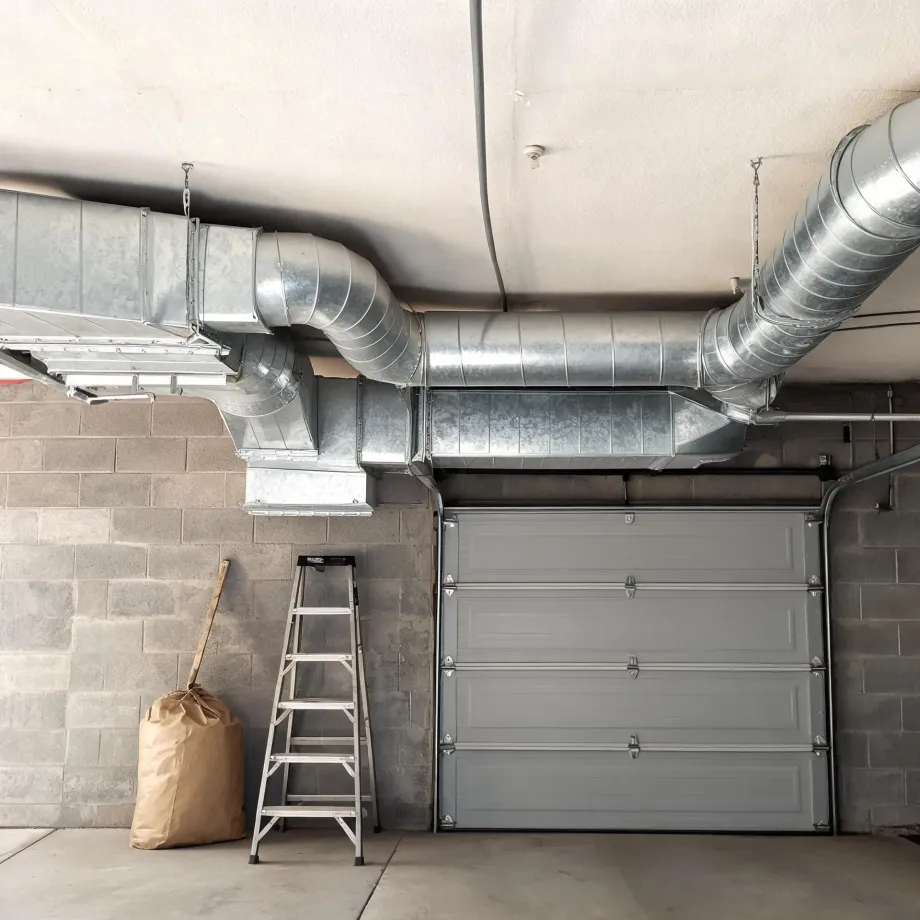
Ductwork laid out for a previous generation of central equipment carries assumptions about airflow that a heat pump does not share. Half the homes in Orangeburg County, South Carolina were built in 1983 or earlier (2020-2024 ACS 5-year). That depth of housing history means a contractor sizing a new heat pump here has to look at what the existing duct system was built to do before the equipment choice settles anything. Trunks that were adequate for one system can starve another of the airflow it needs to perform, and the electrical service gets the same scrutiny, since a heat pump's load profile may not match what the panel was originally configured to handle.
What Gets Installed With a New Heat Pump
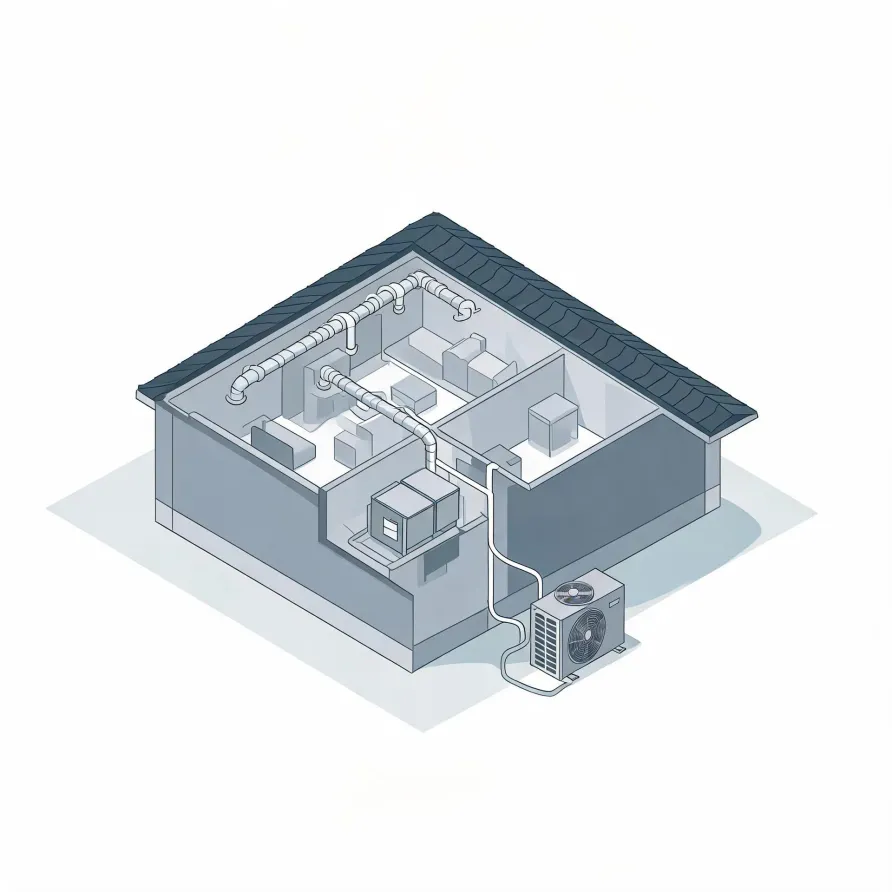
The outdoor unit is the piece a homeowner sees first. It sits on a pad outside the house and holds the compressor and the condenser coil, which are the components doing the heaviest work. Inside, the air handler mounts in a utility space, attic, or closet and pushes conditioned air through the home.
A refrigerant line set runs between the two units, connecting the outdoor pad to the air handler. The thermostat goes on an interior wall where it reads the home's temperature and tells the system when to run. Some installations also include a supplemental electric heat strip inside the air handler for the coldest days.
The drawing shows a typical layout, and a licensed contractor determines exactly what applies to this house.
Get matched in Orangeburg CountyOrangeburg County, by the numbers
241 severe weather events were recorded in Orangeburg County, South Carolina between 2015 and 2024.
NOAA National Centers for Environmental Information, Storm Events Database, bulk CSV export, events 2015-01-01 through 2024-12-31.Half the homes in Orangeburg County, South Carolina were built in 1983 or earlier (2020-2024 ACS 5-year).
U.S. Census Bureau, 2020-2024 American Community Survey 5-Year EstimatesOrangeburg County, South Carolina holds 41,527 housing units (2020-2024 ACS 5-year).
U.S. Census Bureau, 2020-2024 American Community Survey 5-Year EstimatesOwners occupy 67.0% of the occupied homes in Orangeburg County, South Carolina (2020-2024 ACS 5-year).
U.S. Census Bureau, 2020-2024 American Community Survey 5-Year EstimatesHeat Pump Installation Rules for Orangeburg County, South Carolina1 sourced rules and standards
Licensing and Legal Requirements in Orangeburg County, South Carolina
South Carolina requires a mechanical contractor license for contracting work whose total cost of construction is greater than ten thousand dollars.
Severe Weather Events in Orangeburg County
Weather puts hours on heating and cooling equipment. How hard a heat pump has to work over its life is a local fact, shaped by what the climate actually does in this part of South Carolina.
241 severe weather events, 2015–2024. Source: NOAA National Centers for Environmental Information, Storm Events Database.